Services

LIB - TIA - WINDOW SELECTION CONTROL BLOCK

  • Price: €10.00

Download Request

A4U Window Selection Control Block – Flexible Range Monitoring with Intelligent Change Requests

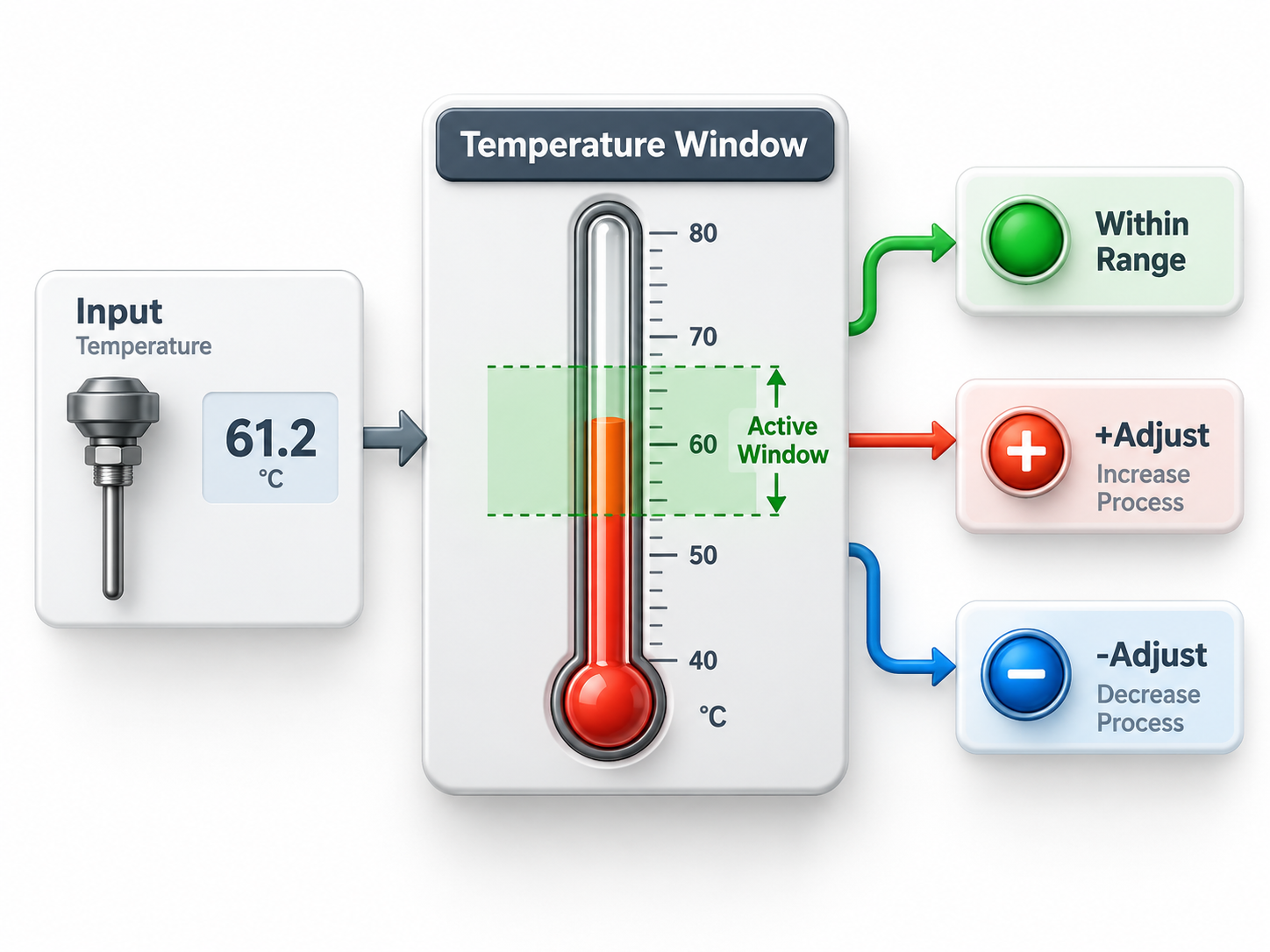
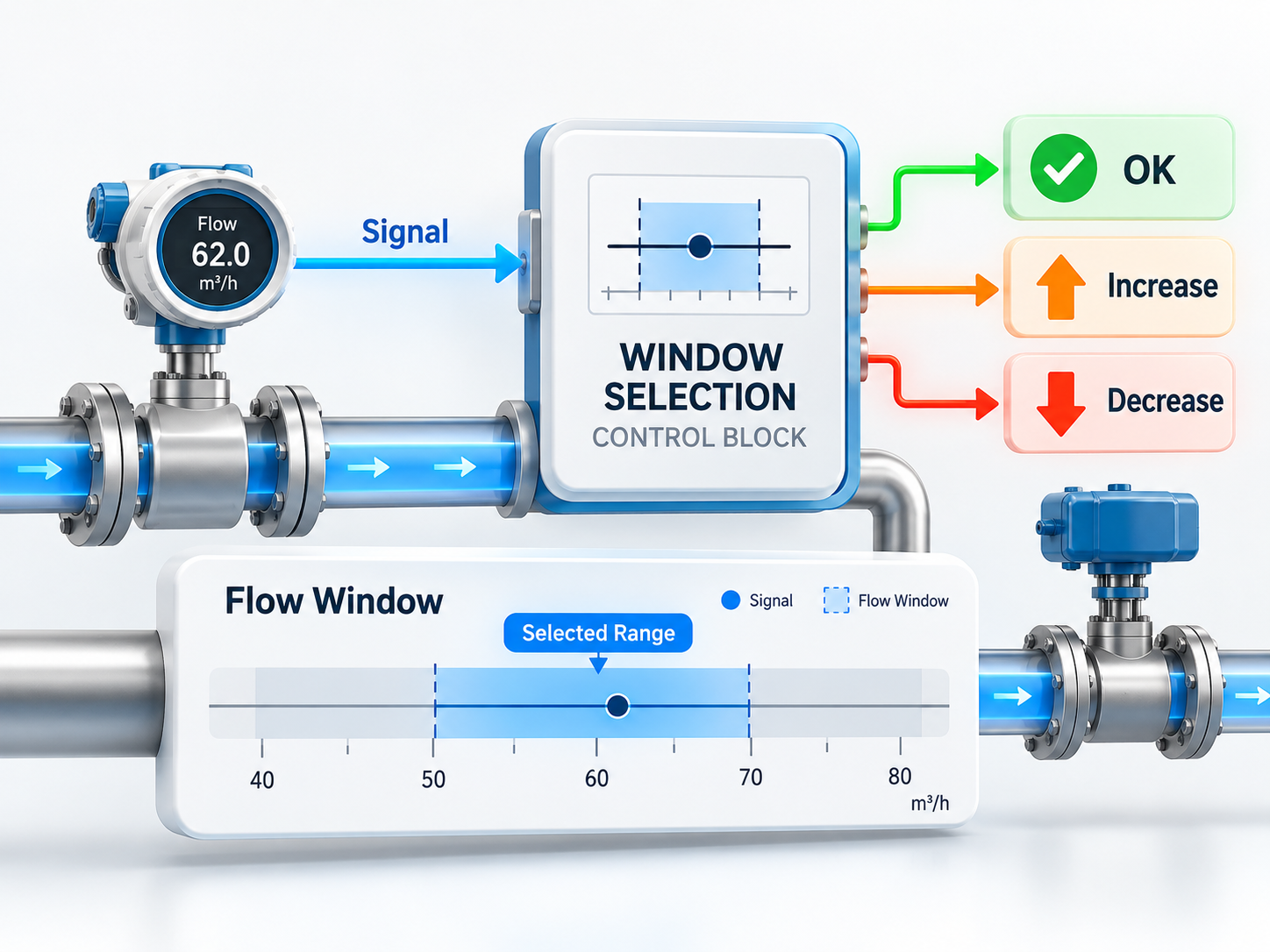
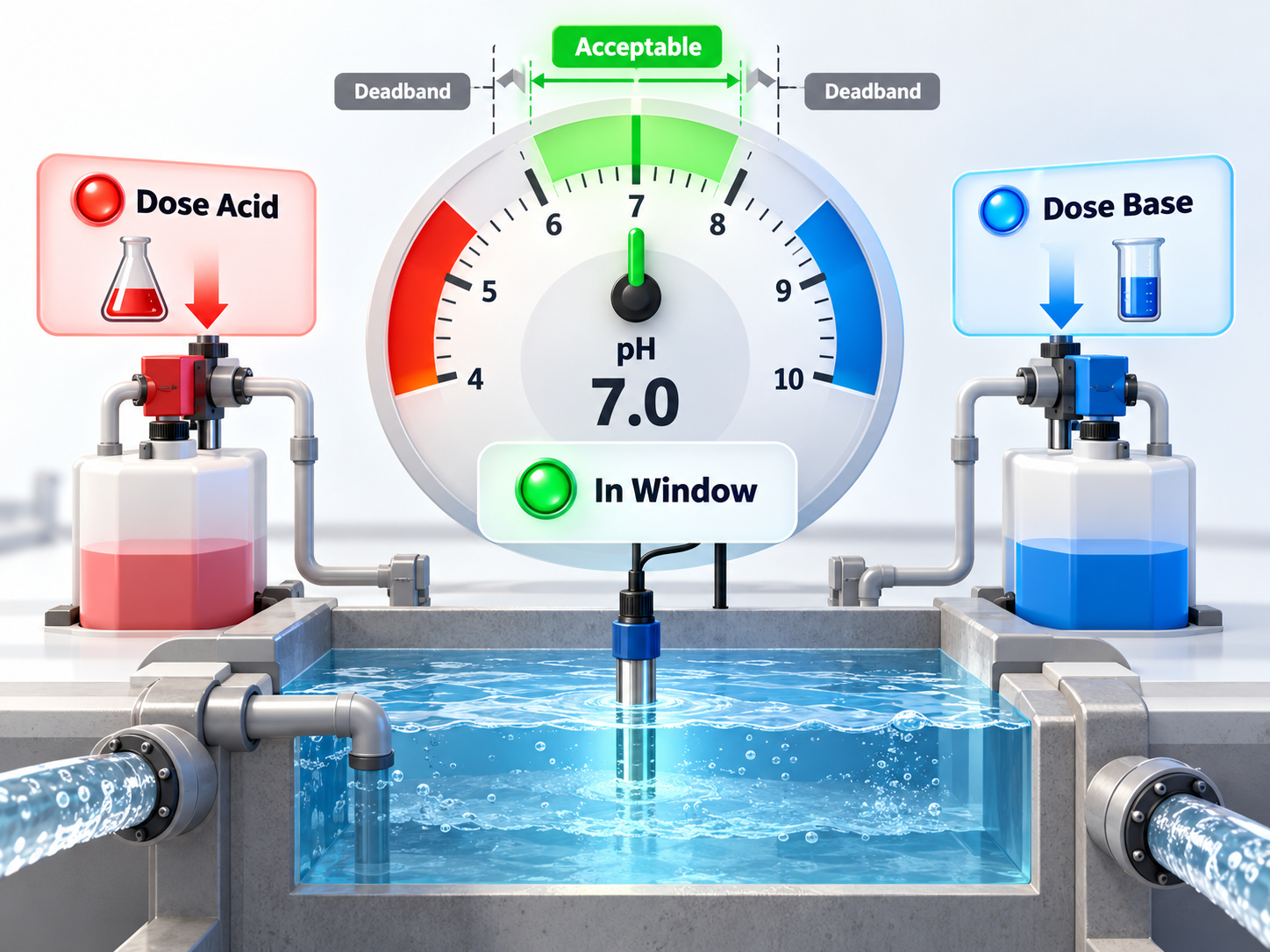
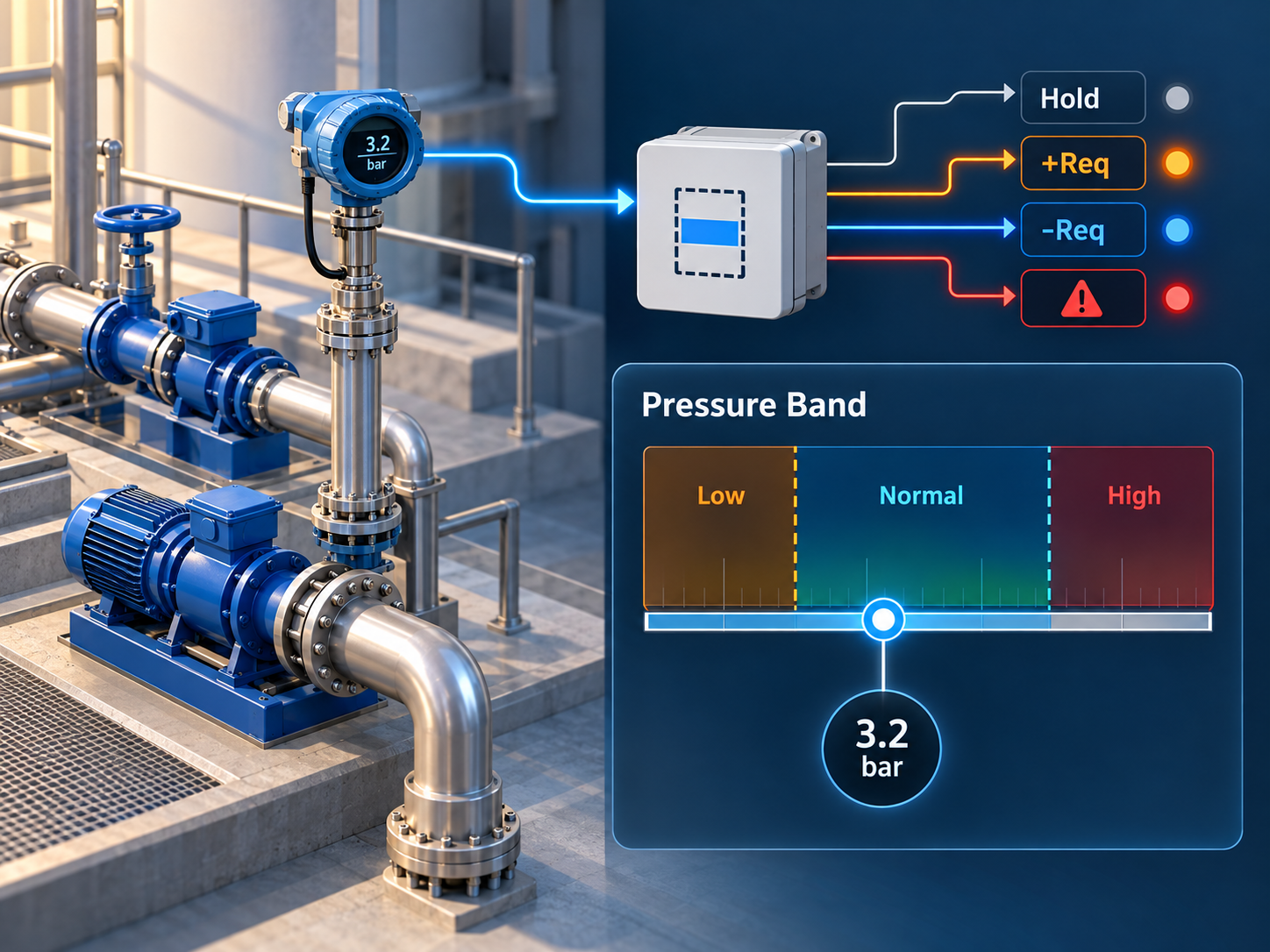
The A4U Window Selection Control Block provides a structured and reusable solution for monitoring a process value against configurable operating windows within PLC-based industrial automation systems. The block compares an incoming process signal with a defined reference value and tolerance window, allowing the control system to determine whether the signal remains within the acceptable range or has moved above or below the configured limits. Adjustable window values and separate upper and lower deadbands help prevent unwanted switching or chattering when the process fluctuates close to a boundary, while configurable hold times delay increment or decrement change requests to avoid false reactions caused by short-duration spikes or noise. When the process remains above the upper window for longer than the configured hold time, the block can generate an increment-related change request, while values remaining below the lower window can generate a decrement-related request for external control logic. The block also tracks the currently active window and records whether the most recent out-of-window condition occurred above or below the selected range, providing useful information for diagnostics, trend evaluation and multistage control strategies. Integrated parameter-error and out-of-window indications support commissioning, monitoring and troubleshooting activities. This makes the block suitable for applications such as setpoint-range supervision, tolerance checking, process mode selection, operator-adjustable ranges and other functions where a process variable must remain within defined limits. Because it is designed as a standard master control block, it is not dependent on a specific HMI or SCADA platform and can be integrated with different supervisory systems according to the project architecture. By combining reference-based window comparison, deadband handling, delayed change requests, active-window tracking and diagnostic outputs within one reusable structure, the A4U Window Selection Control Block provides a flexible and standardized foundation for stable range-based process monitoring and control.


Define the Window. Monitor the Range. Trigger Smarter Actions.

Improve range-based process control with the A4U Window Selection Control Block. The block compares a live process value against configurable reference windows, deadbands and hold times, generating clear increment or decrement change requests when the signal remains outside the permitted range. With active-window tracking, out-of-window detection and parameter-error monitoring, it provides a reusable and standardized solution for tolerance checking, setpoint supervision and multistage process control. Independent of any specific SCADA platform, the block can be integrated into a wide range of industrial automation architectures.

FAQs

What is the purpose of the Window Selection Control Block?
+
The block is designed to monitor a process value against a defined operating window around a reference value. It determines whether the signal remains within the acceptable range and can generate corrective change requests when the value moves outside that range.
How is the operating window defined?
+
The operating window is established around a configured reference value using a defined tolerance range. This creates an acceptable upper and lower limit within which the monitored process value can vary without requiring corrective action
What is the purpose of the deadband function?
+
Deadband provides an additional margin around the window boundaries to prevent repeated switching or chattering when the process value fluctuates close to the upper or lower limit.
What types of applications can use this control block?
+
The block can be used for tolerance checking, setpoint-range supervision, operating-mode selection, process monitoring, and applications where corrective action is required when a value moves outside an acceptable band.
What is the main benefit of using the Window Selection Control Block?
+
The main benefit is a standardized method for monitoring a process value within a configurable operating window while incorporating deadband, delay, change-request, and error-handling functions. This helps reduce false reactions, simplify process supervision, and improve consistency across PLC applications.

All Services