A4U Gradian to Radian Scaling Conversion Control Block – Precise Angular Conversion for Motion and Engineering Calculations
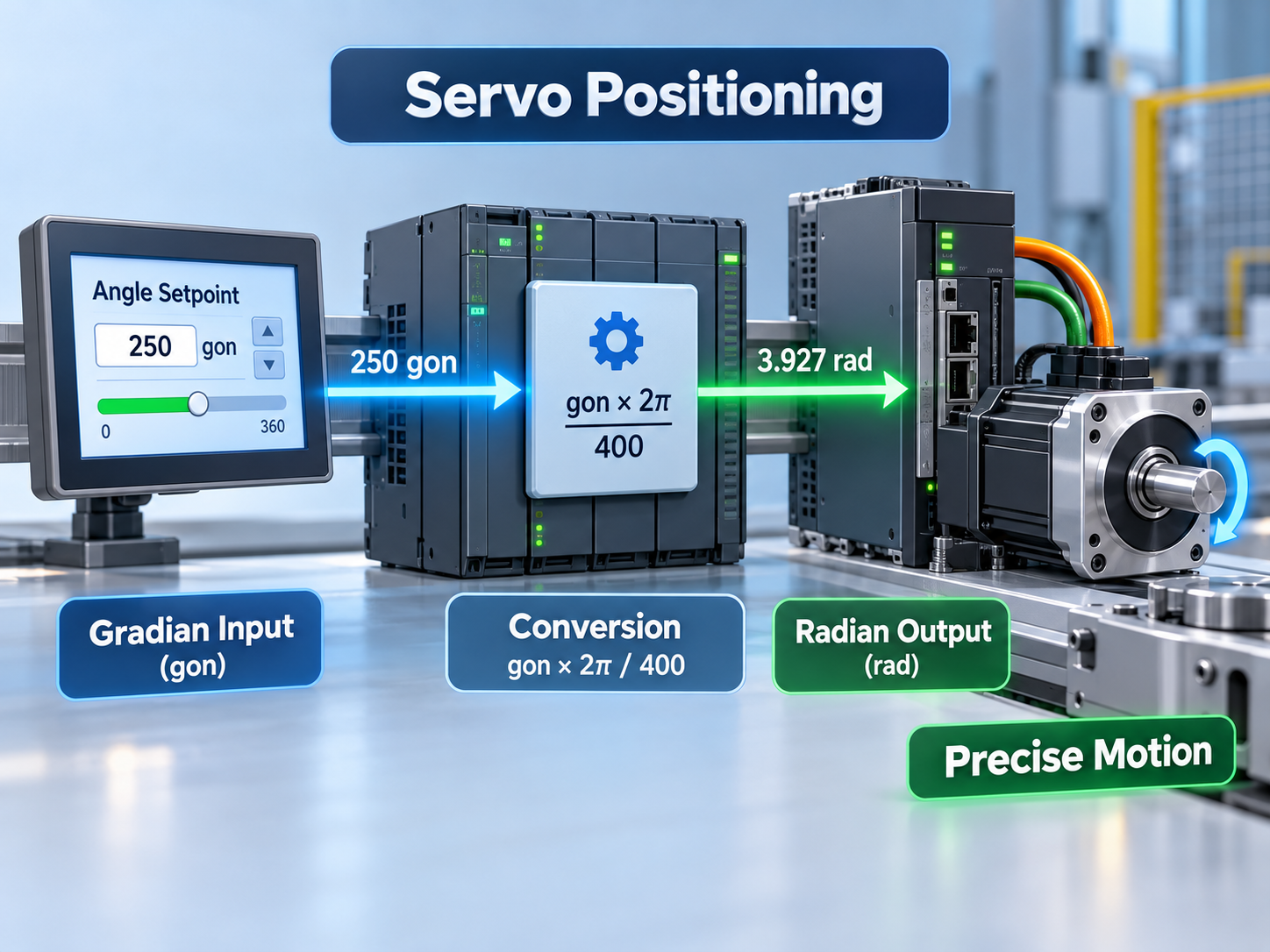
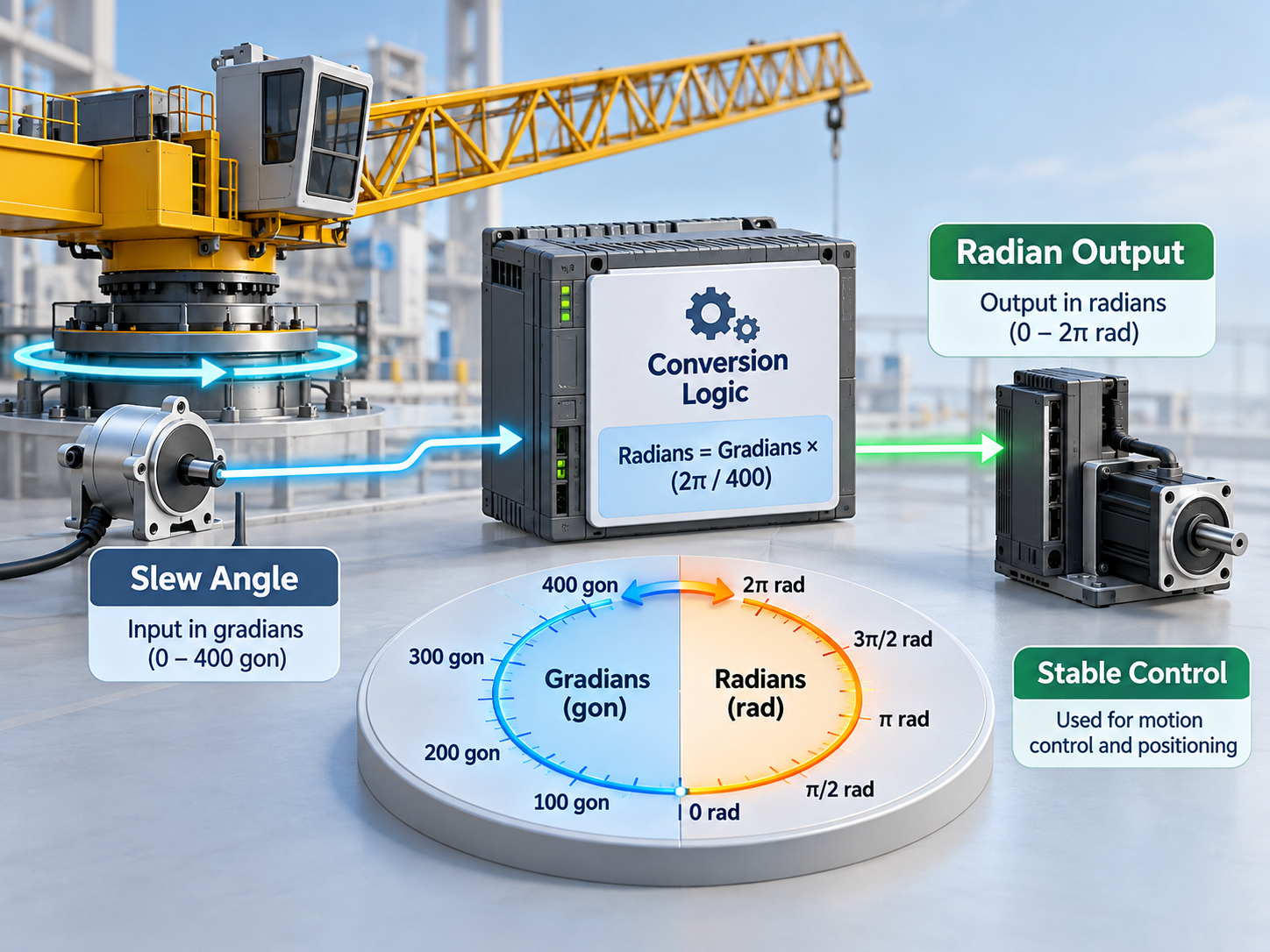
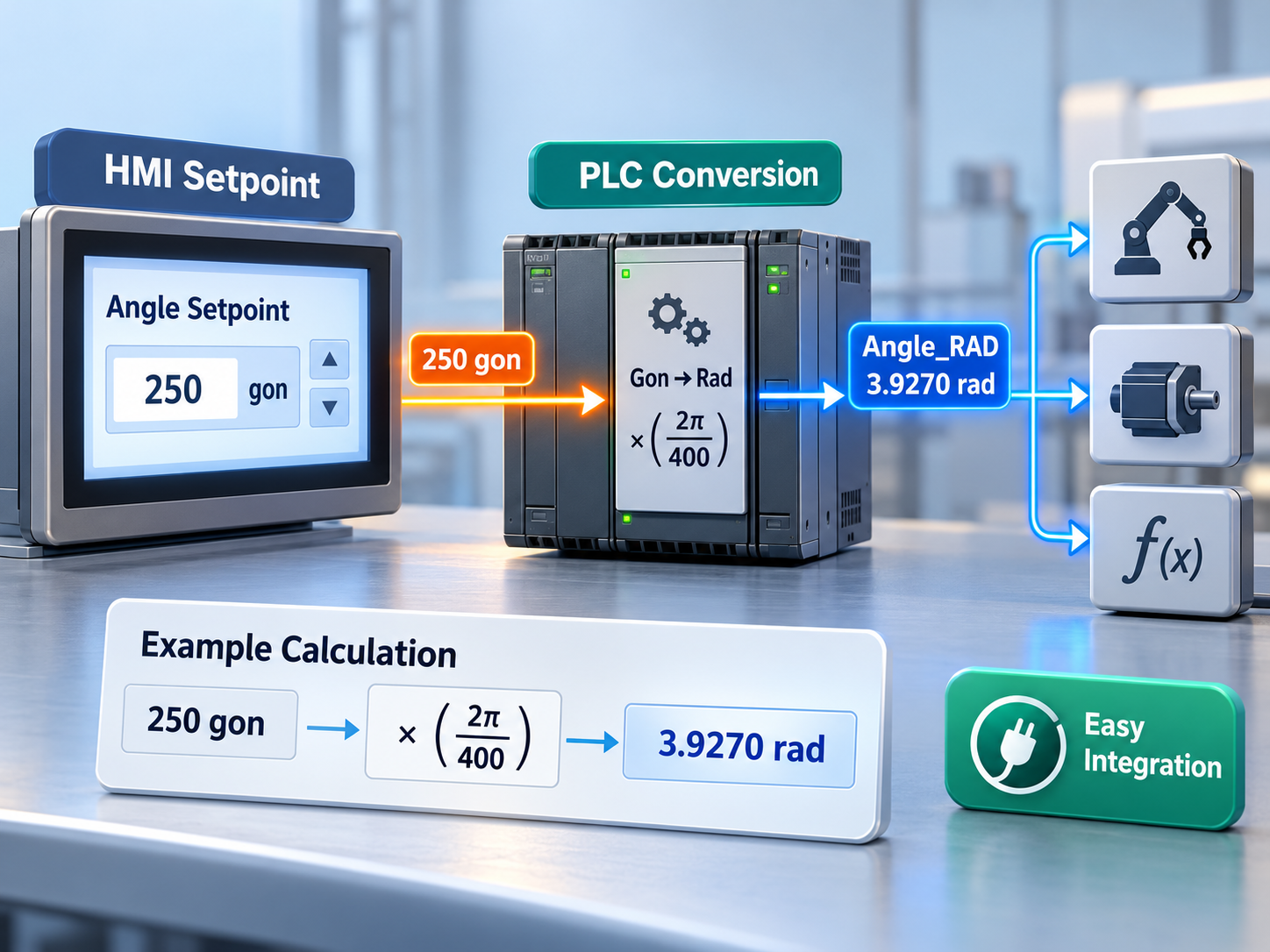
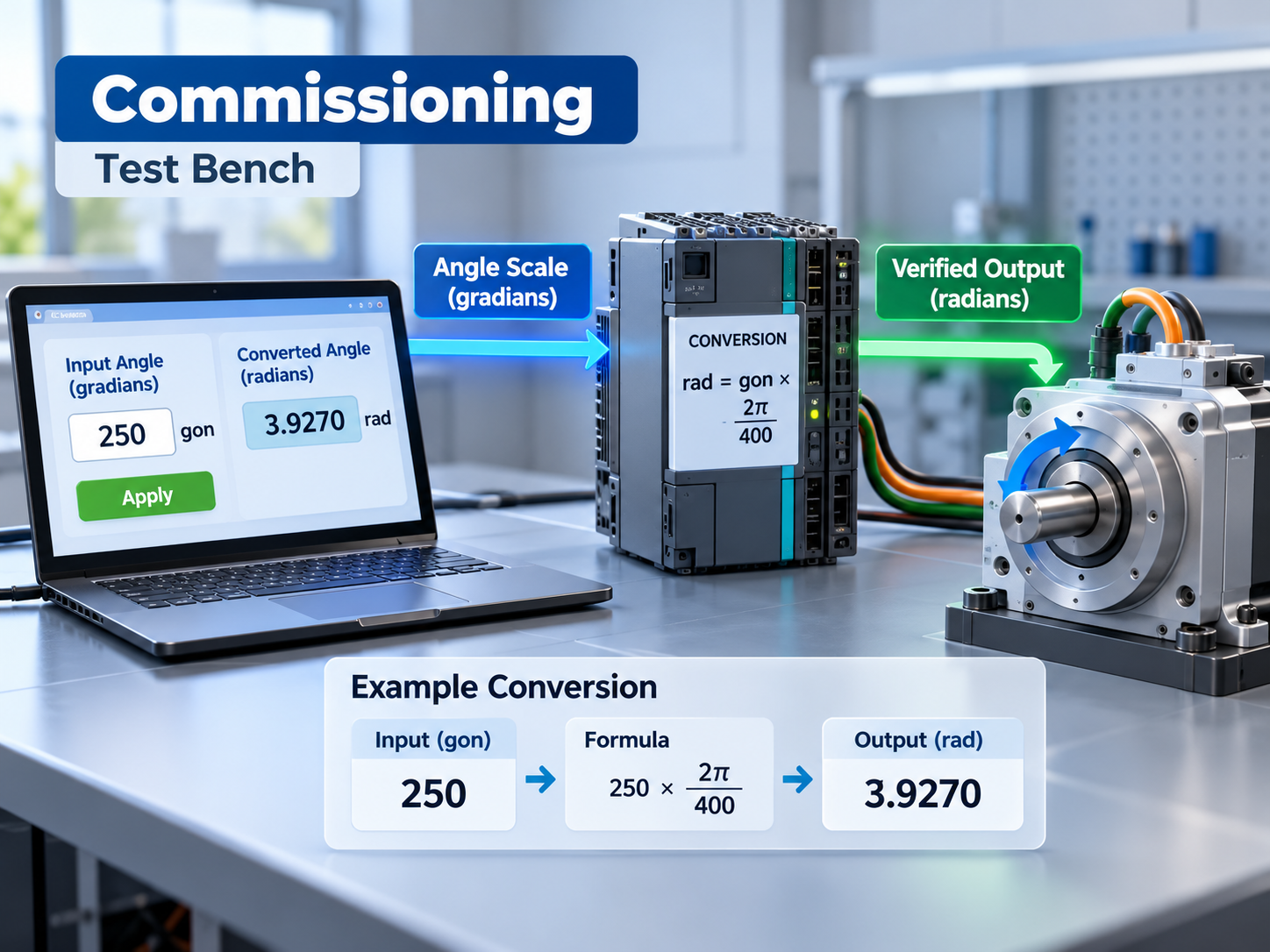
The A4U Gradian to Radian Scaling Conversion Control Block provides a structured and reusable solution for converting angular values from gradians into radians within PLC-based industrial automation systems. The block is designed for applications where angle information is supplied in gradians but downstream motion, control or mathematical functions require radians, helping maintain consistency between operator inputs, measurement systems and engineering calculations. It performs the conversion using the standard relationship in which one full revolution equals 400 gradians and 2π radians, allowing angular values to be translated accurately into the SI-based radian format. This makes the block suitable for motion-control systems, robotic positioning, servo applications, trigonometric calculations, analog signal processing and other engineering functions that rely on radian-based angular data. The block processes the configured angle input when enabled and provides the converted angular value through a dedicated radian output. Integrated parameter-error monitoring identifies invalid input conditions, helping support reliable commissioning and operation. By providing a standardized angular conversion function inside the PLC, the block reduces the need for repeated custom calculations and helps simplify integration between systems that use different angular units. Because it is designed as a standard master control block, it is not dependent on a specific HMI or SCADA platform and can be integrated into different automation architectures according to project requirements. By combining real-time angular conversion, standardized mathematical scaling and parameter validation within one reusable structure, the A4U Gradian to Radian Scaling Conversion Control Block provides a consistent foundation for precise angular processing across industrial automation and motion-control applications.