A4U Millimetre to Meter Conversion Control Block – Real-Time Speed Calculation with Direction and Filtering
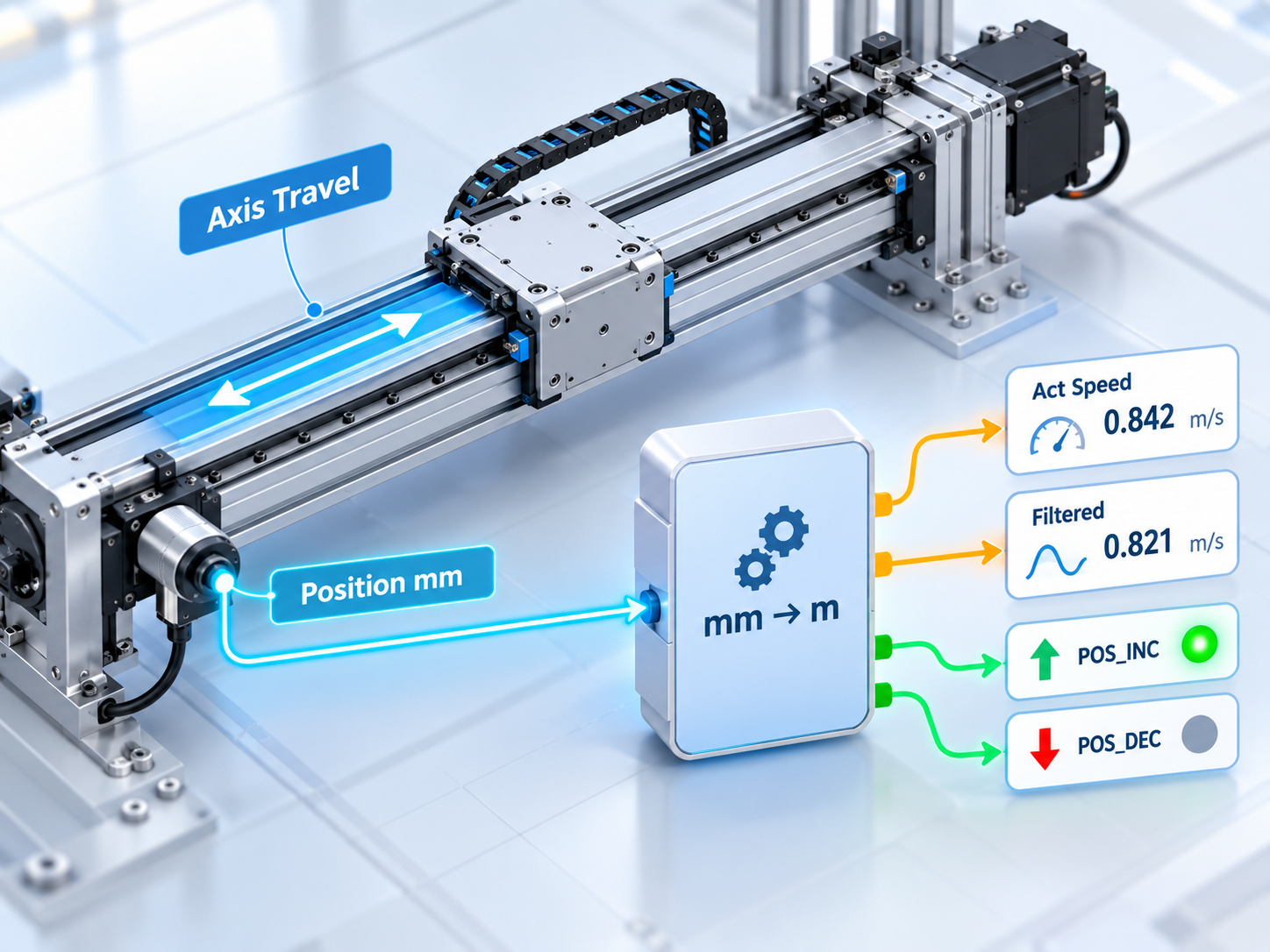
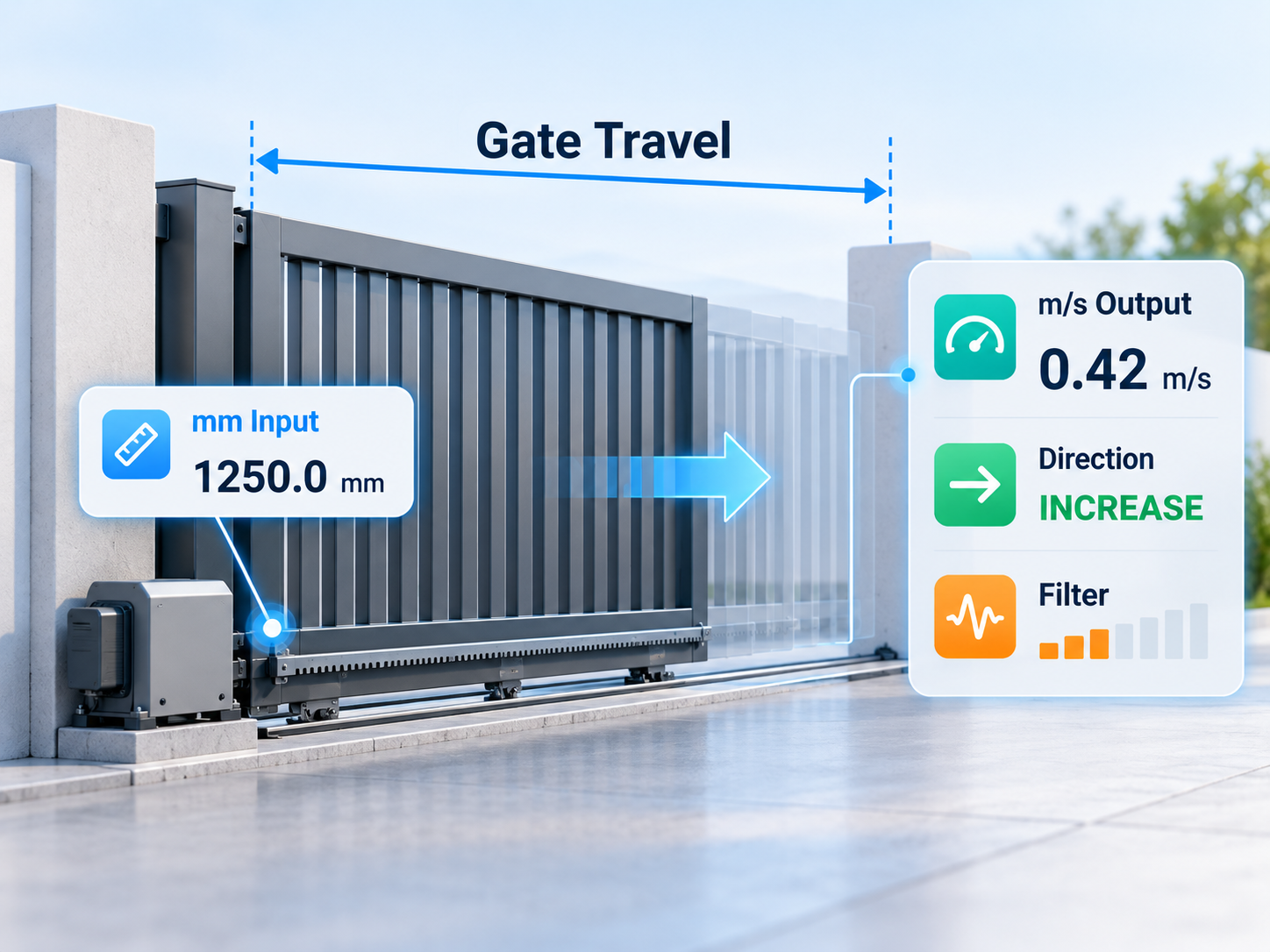
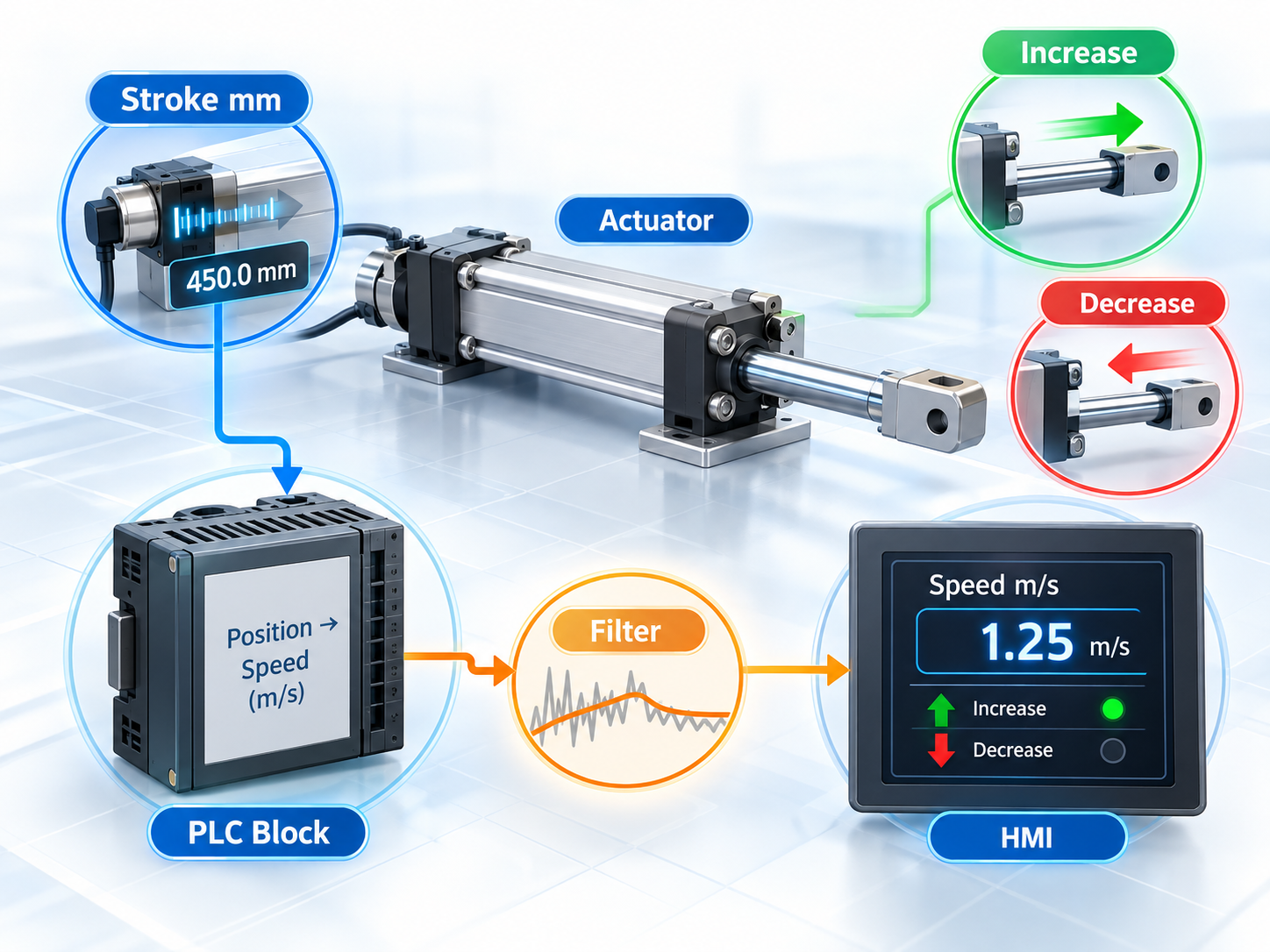
The A4U Millimetre to Meter Conversion Control Block provides a structured and reusable solution for calculating the actual linear speed of a moving element from position values measured in millimetres within PLC-based industrial automation systems. Rather than performing only a simple unit conversion, the block continuously samples the position signal, measures the change in position over a configurable time base and converts the result into a speed value expressed in metres per second. This makes the block suitable for applications such as conveyor belts, linear actuators and other motion systems where position feedback is available and real-time speed information is required. A configurable time-base parameter determines how often the speed calculation is updated, while an optional first-order low-pass filter can be applied to reduce rapid fluctuations caused by noisy encoder or position signals. The block provides both unfiltered and filtered actual speed outputs, allowing the control system to use either the raw calculated value or a smoother signal according to the application requirement. Integrated direction detection indicates whether the monitored position is increasing or decreasing, while both direction outputs remain inactive when no position change is detected. Parameter monitoring also verifies that the configured time base is valid and generates an error indication when the time-base setting is zero or otherwise unsuitable for the calculation. By combining position-based speed calculation, millimetre-to-metre conversion, configurable timing, signal filtering, motion-direction detection and parameter validation within one reusable structure, the A4U Millimetre to Meter Conversion Control Block provides a consistent foundation for linear motion monitoring and speed evaluation across industrial automation applications.