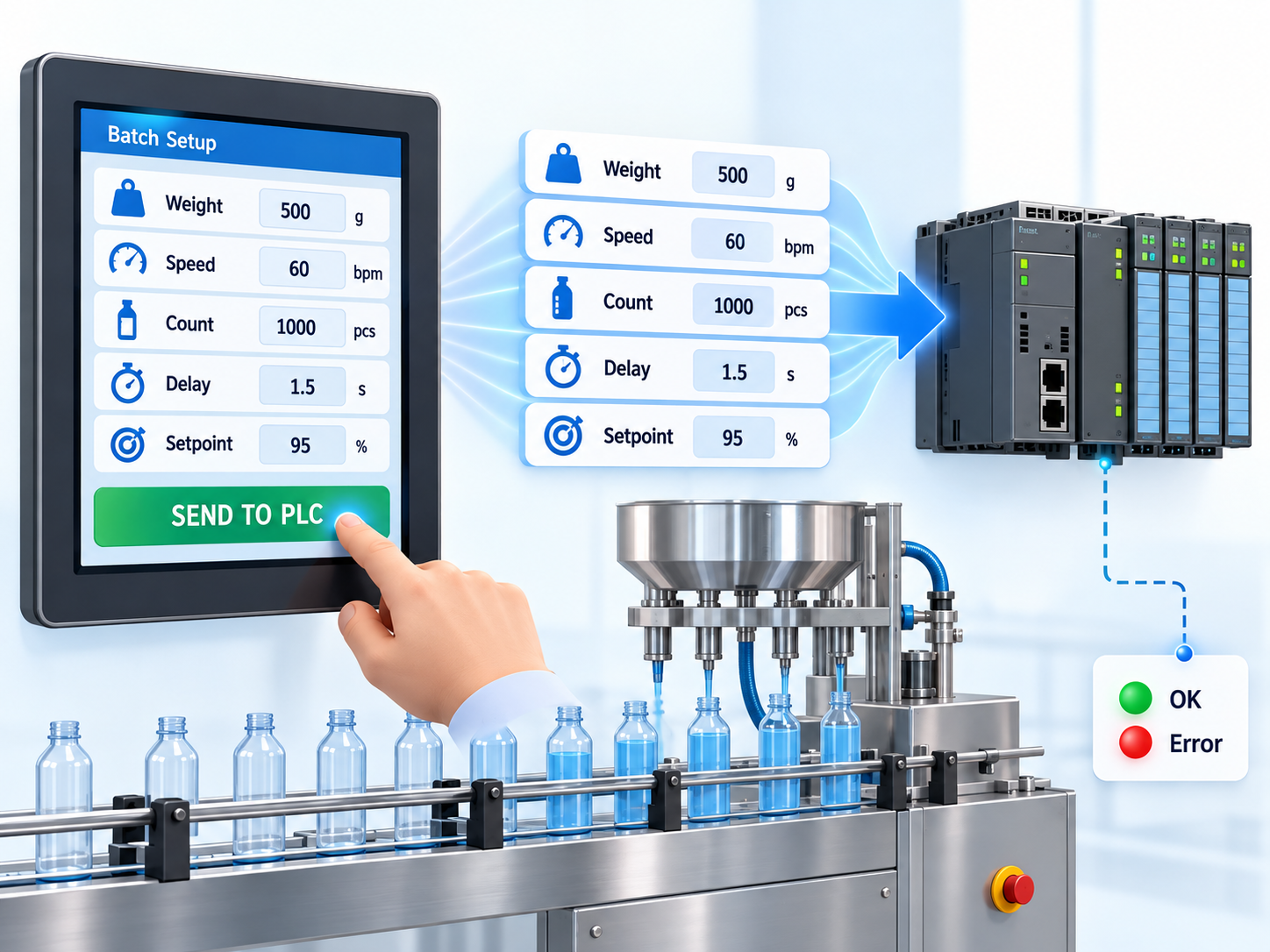
A4U HMI to PLC Multi-Variable Receive Control Block – Centralized and Reliable Data Transfer
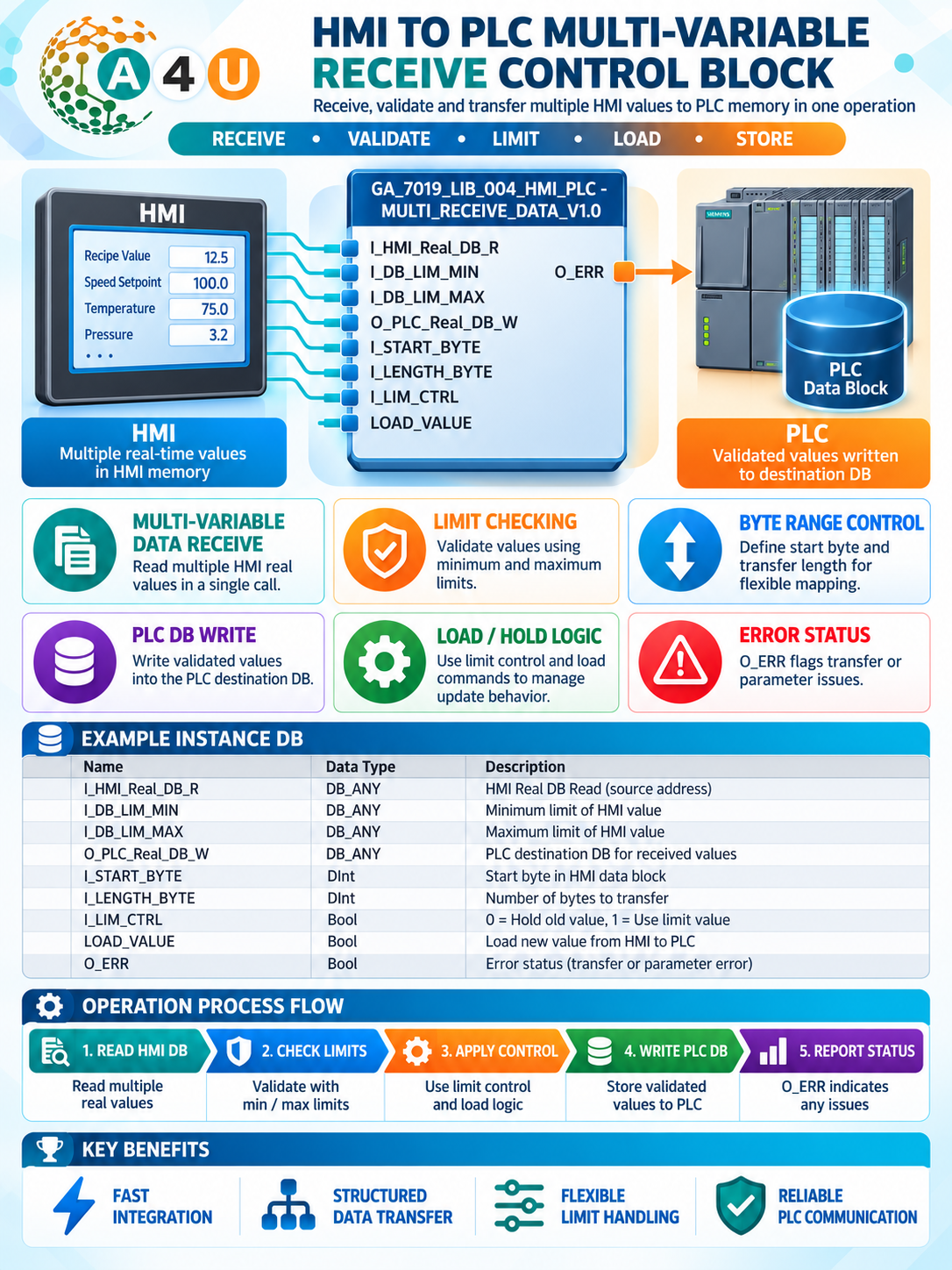
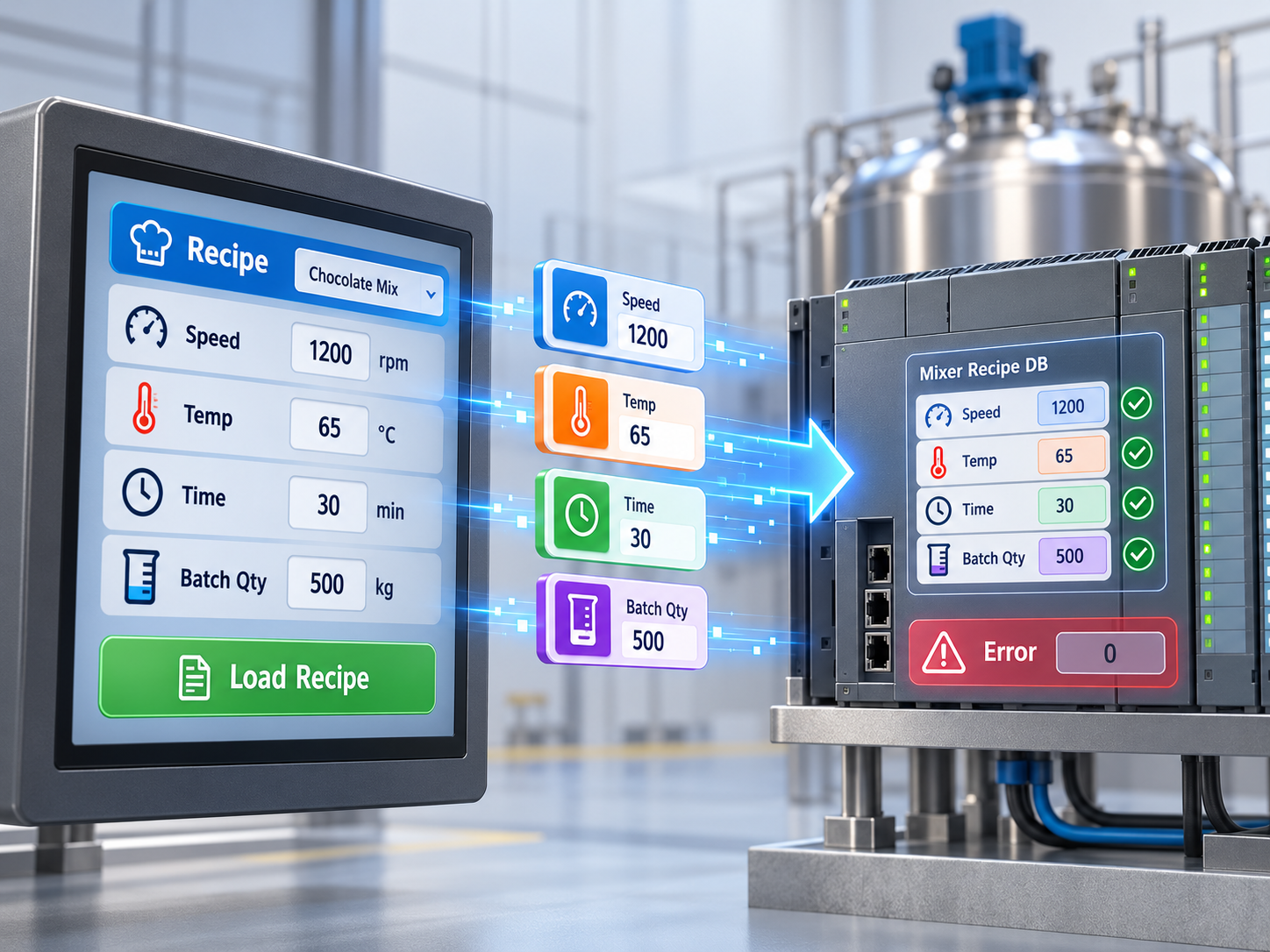
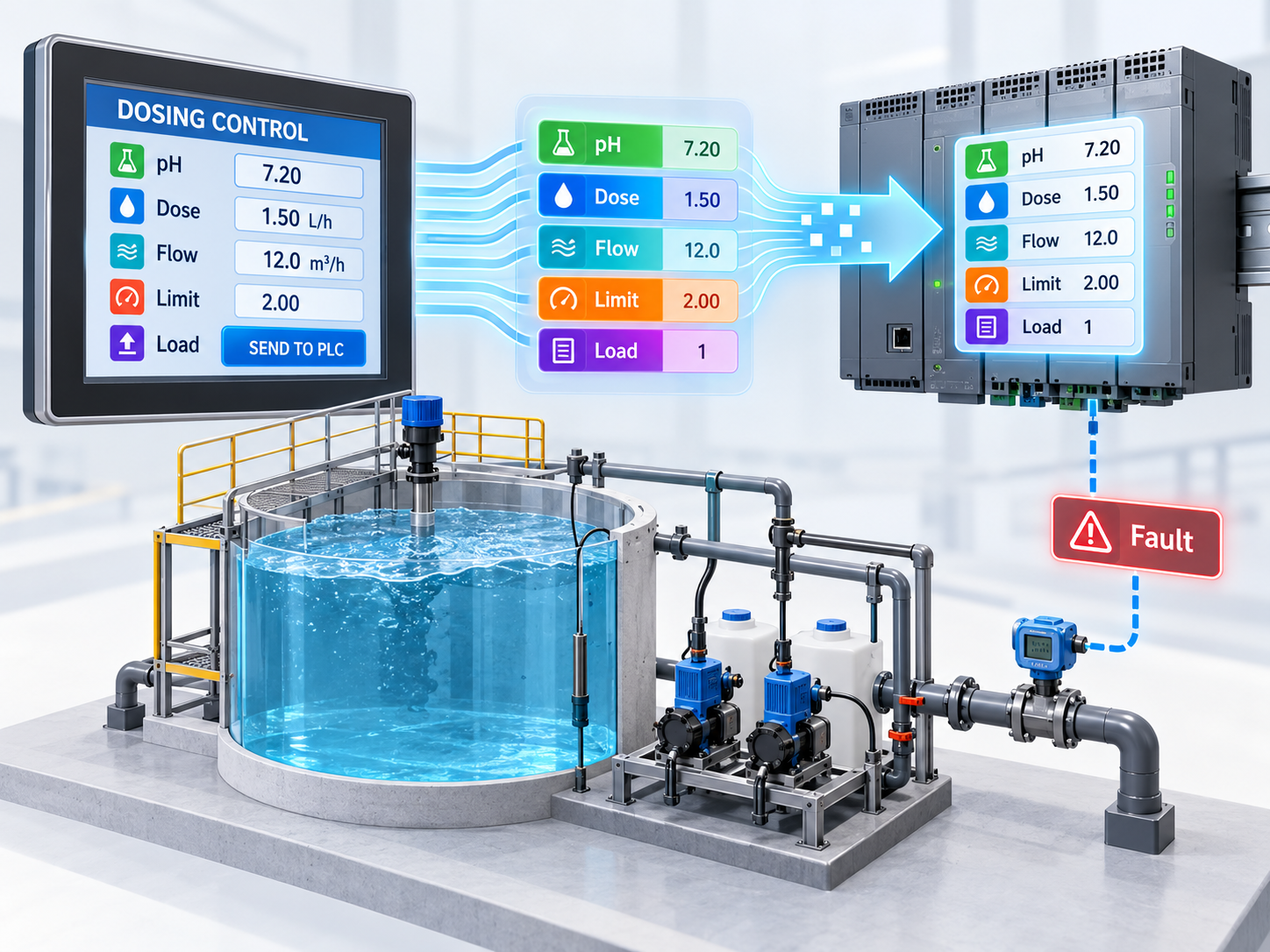
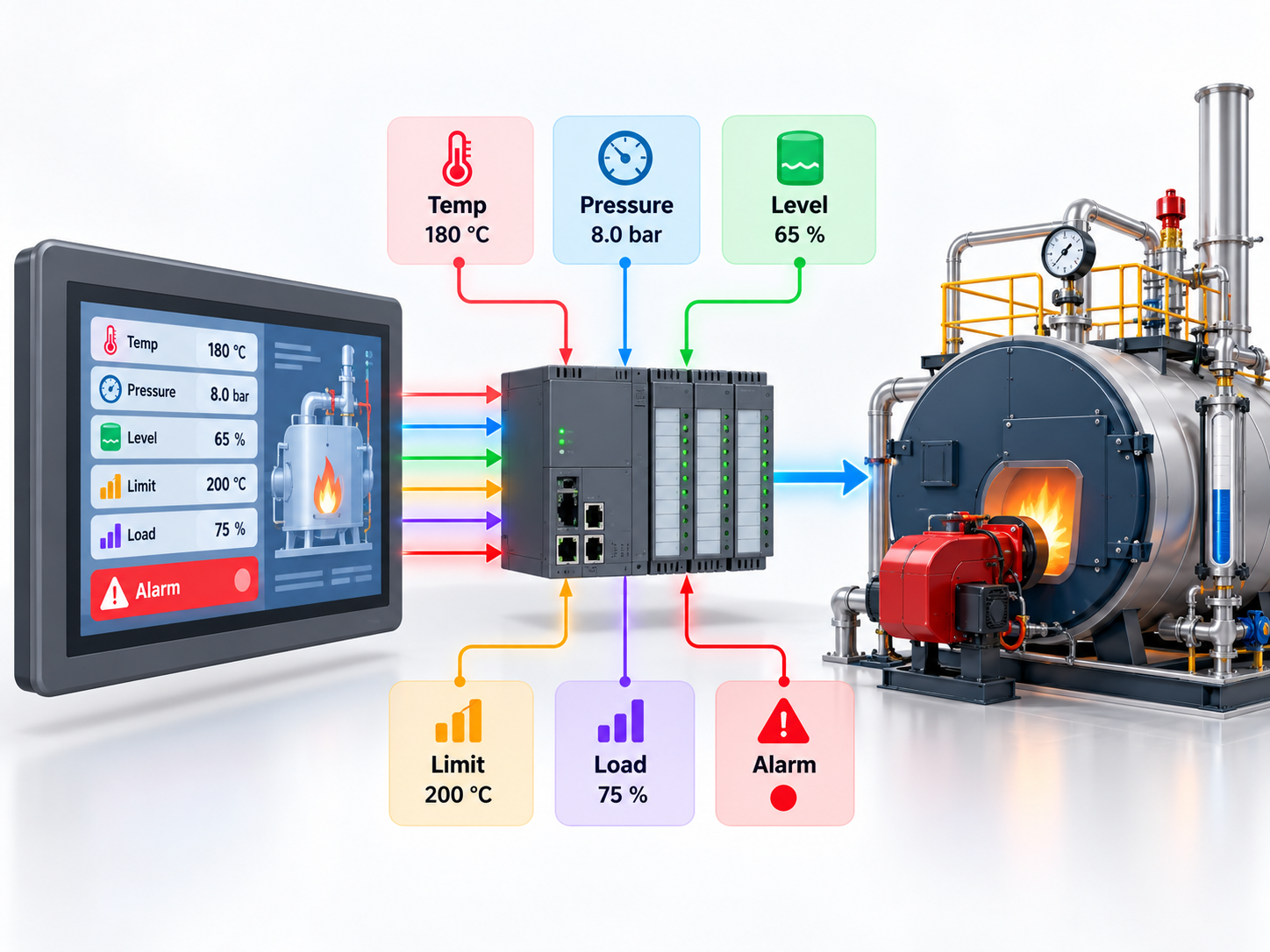
The A4U HMI to PLC Multi-Variable Receive Control Block provides a structured and reusable solution for transferring multiple real-time values from an HMI to a PLC within industrial automation systems. The block centralizes the handling of HMI-originated data by reading values from a defined HMI data area and writing the received information into a designated PLC data block, helping simplify communication between the operator interface and the control program. Configurable start-byte and length parameters define the portion of data to be processed, allowing multiple variables to be transferred within one standardized operation. Minimum and maximum limit inputs can be used to validate incoming values, while the limit-control function determines whether these range checks are applied. A configurable load value can also be used as a fallback or default value when communication or transfer-related issues occur, supporting more predictable behaviour during abnormal conditions. The block provides an error output to indicate problems detected during data transfer or processing, helping engineers identify configuration, range or communication-related issues during commissioning and troubleshooting. Because it is designed as a standard master control block, it is not dependent on one specific HMI or SCADA platform and can be integrated into different visualization architectures according to the project design. By combining multi-variable reception, configurable data ranges, byte-based transfer definition, limit supervision, fallback-value handling and error indication within one reusable structure, the A4U HMI to PLC Multi-Variable Receive Control Block helps reduce repeated communication logic and provides a consistent foundation for reliable operator-to-PLC data exchange across industrial automation projects. 7019 HMI TO PLC MULTI-VARIABLE …