A4U Rotational to Linear Speed Conversion Control Block – Accurate RPM to m/min Calculation for Drive and Motion Systems
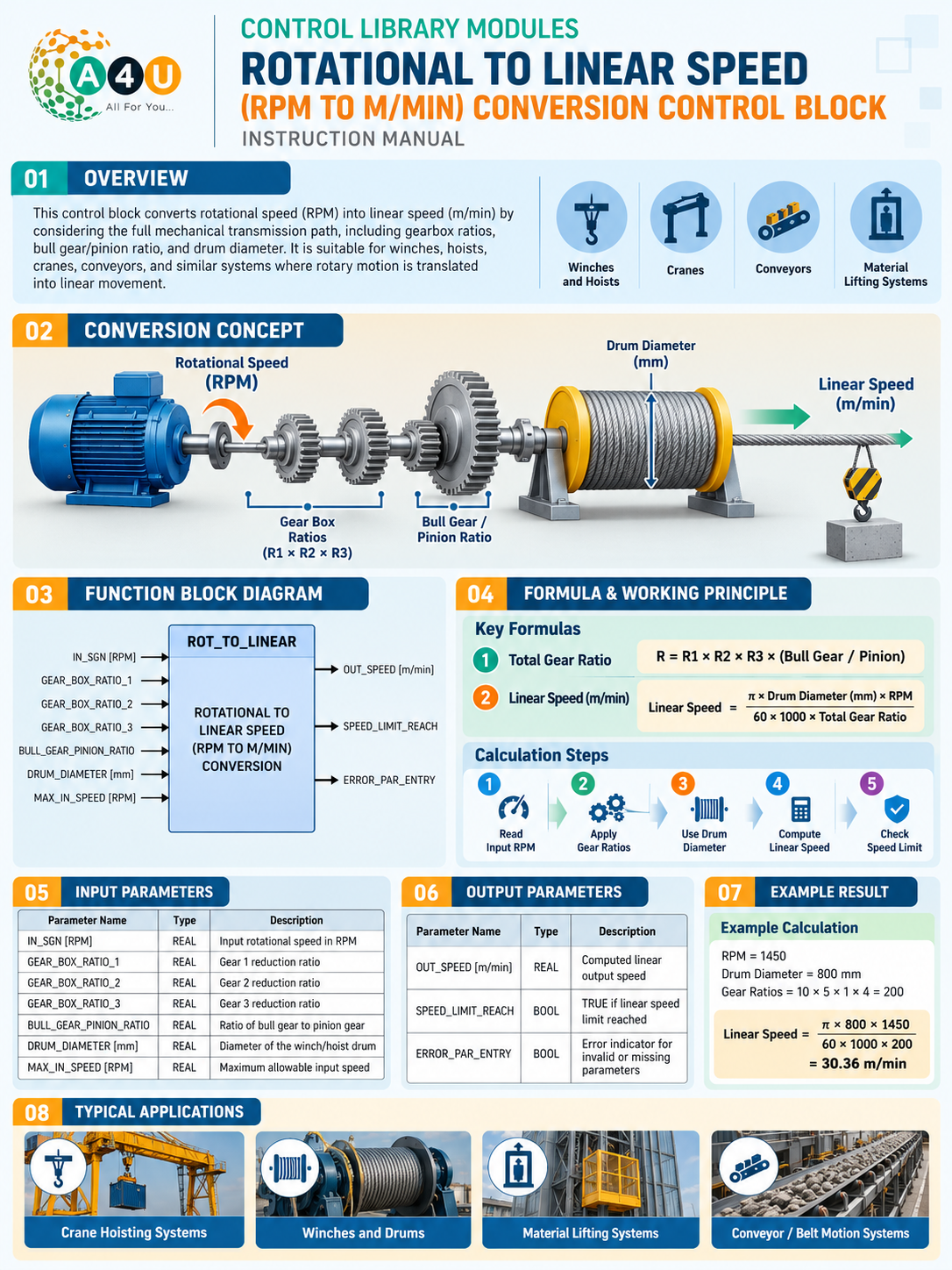
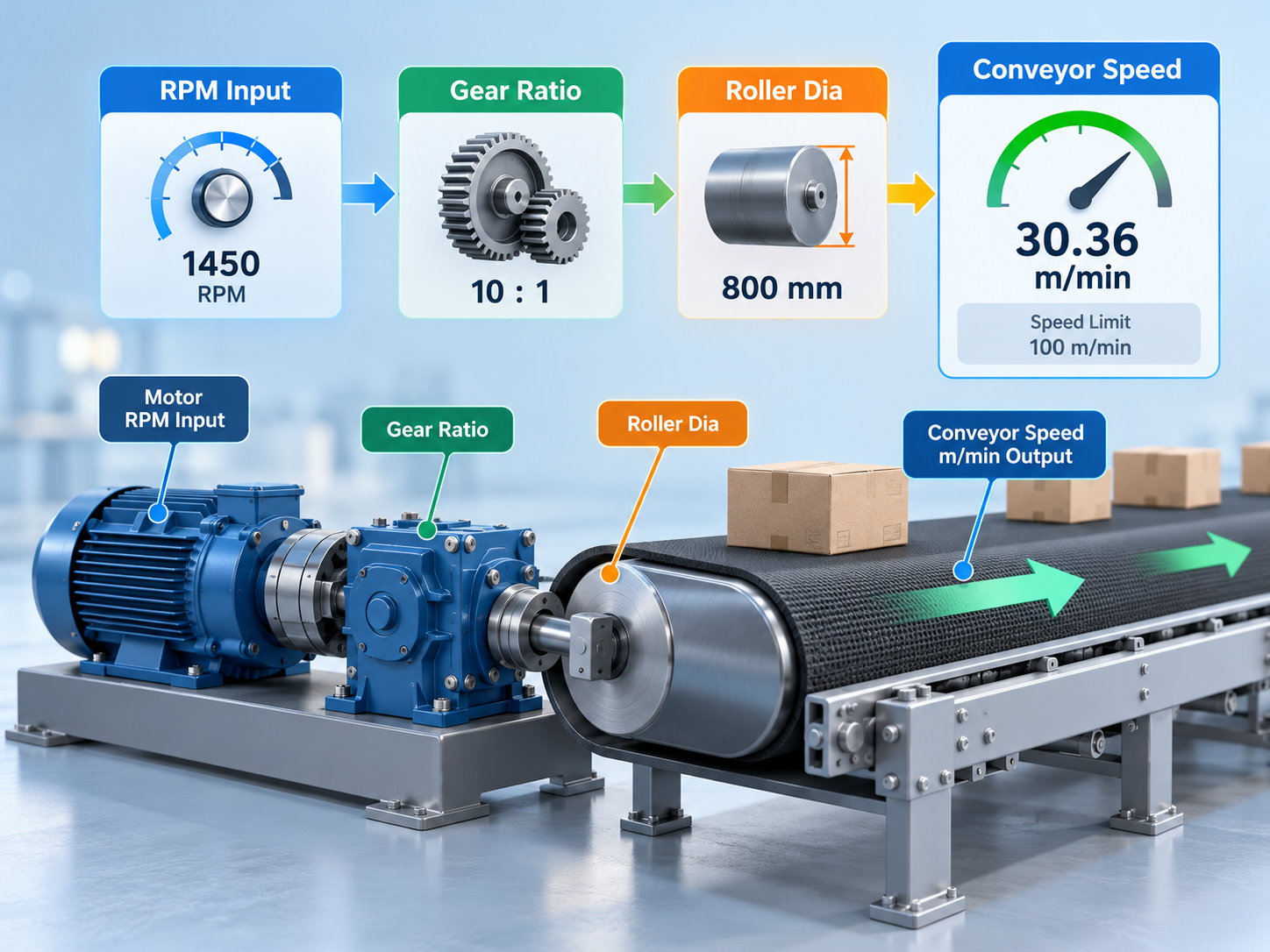
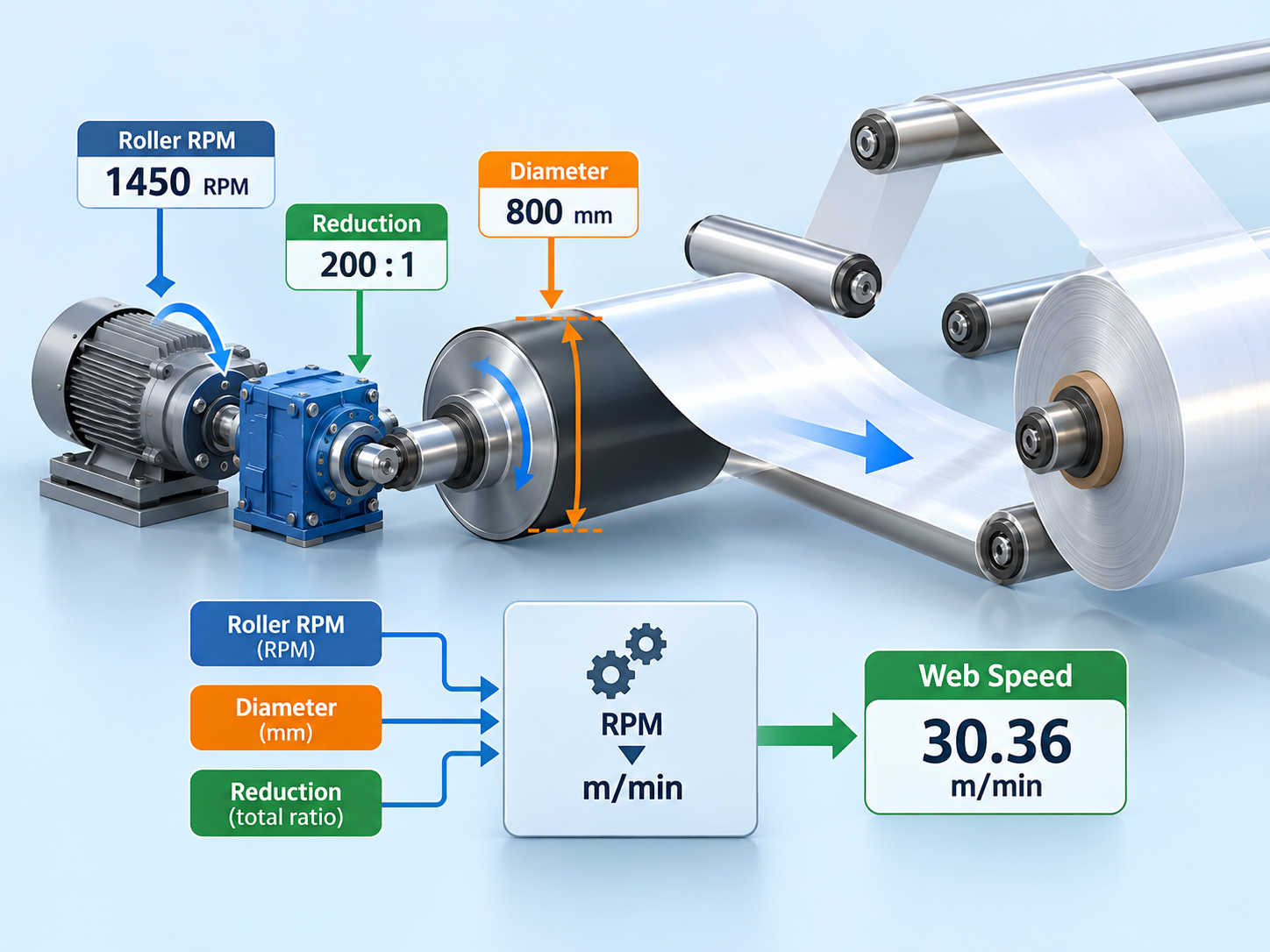
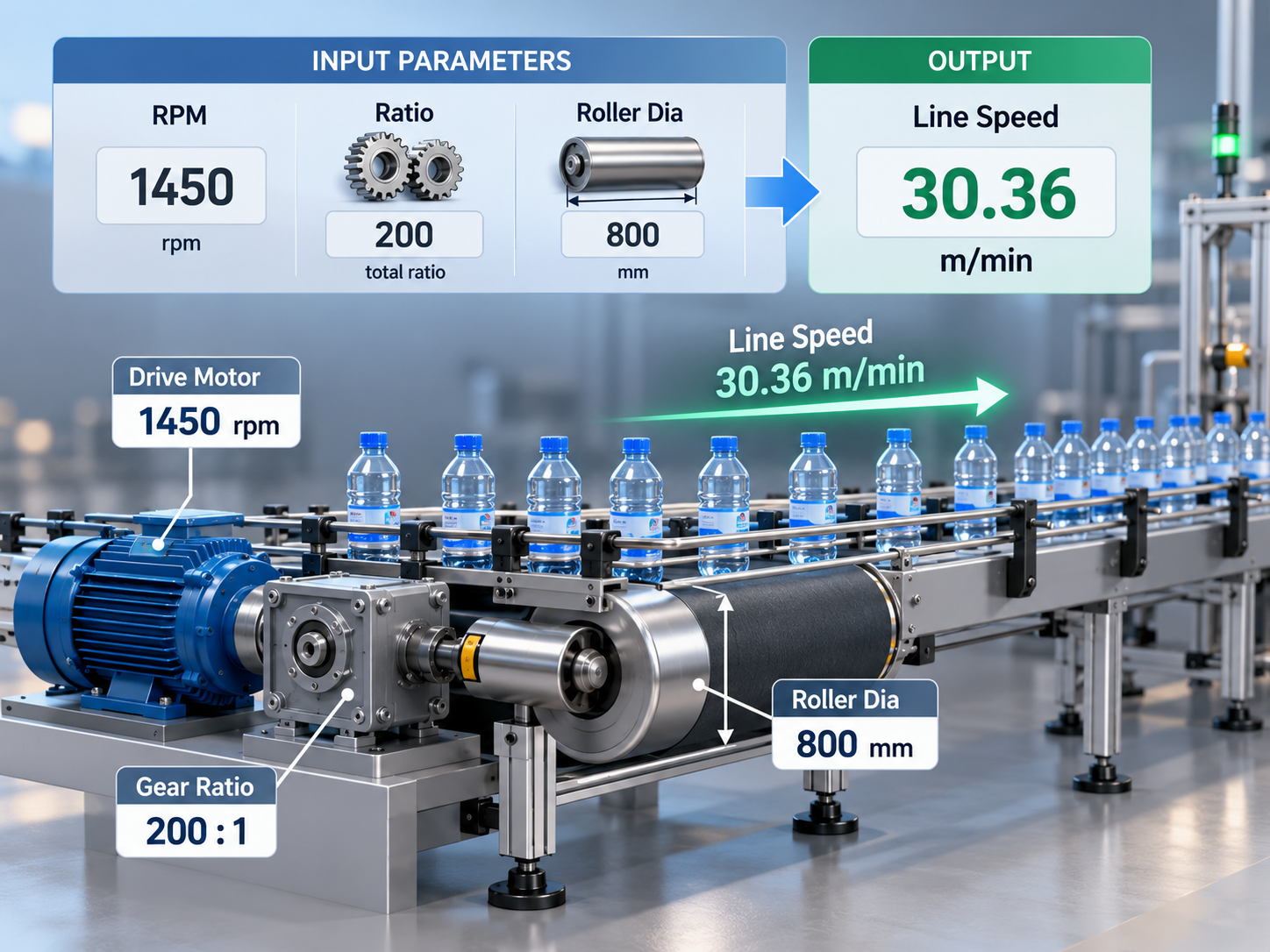
The A4U Rotational to Linear Speed Conversion Control Block provides a structured and reusable solution for converting rotational speed in revolutions per minute into linear speed in meters per minute within PLC-based industrial automation systems. Designed for applications such as winches, cranes, hoists, material lifts, haulage systems, drums and other mechanisms where rotary motion is translated into linear movement, the block calculates the effective line or surface speed by considering the complete mechanical transmission path. The calculation uses the input RPM together with up to three gearbox ratios, a bull gear/pinion ratio and the configured drum diameter to determine the resulting linear speed at the rope, cable, belt or other moving element. This allows the calculated value to reflect the actual drivetrain configuration rather than relying on a simple direct RPM conversion. The block also compares the calculated linear speed against a configurable maximum speed limit and activates a dedicated Speed Limit Reach output when the defined limit is reached, allowing downstream PLC logic, alarms or protective functions to react accordingly. An integrated parameter-error output identifies invalid or missing configuration values, helping engineers detect setup issues during commissioning and troubleshooting. This makes the block suitable for speed feedback, motion supervision, drivetrain validation and applications where actual rope, cable or belt speed must be derived from motor or shaft RPM. Because it is designed as a standard master control block, it is not dependent on a specific HMI or SCADA platform and can be integrated into different automation architectures according to project requirements. By combining RPM conversion, multi-stage gear-ratio handling, drum-diameter compensation, linear-speed supervision and parameter validation within one reusable structure, the A4U Rotational to Linear Speed Conversion Control Block provides a consistent foundation for reliable speed calculation across industrial drive and motion-control applications.