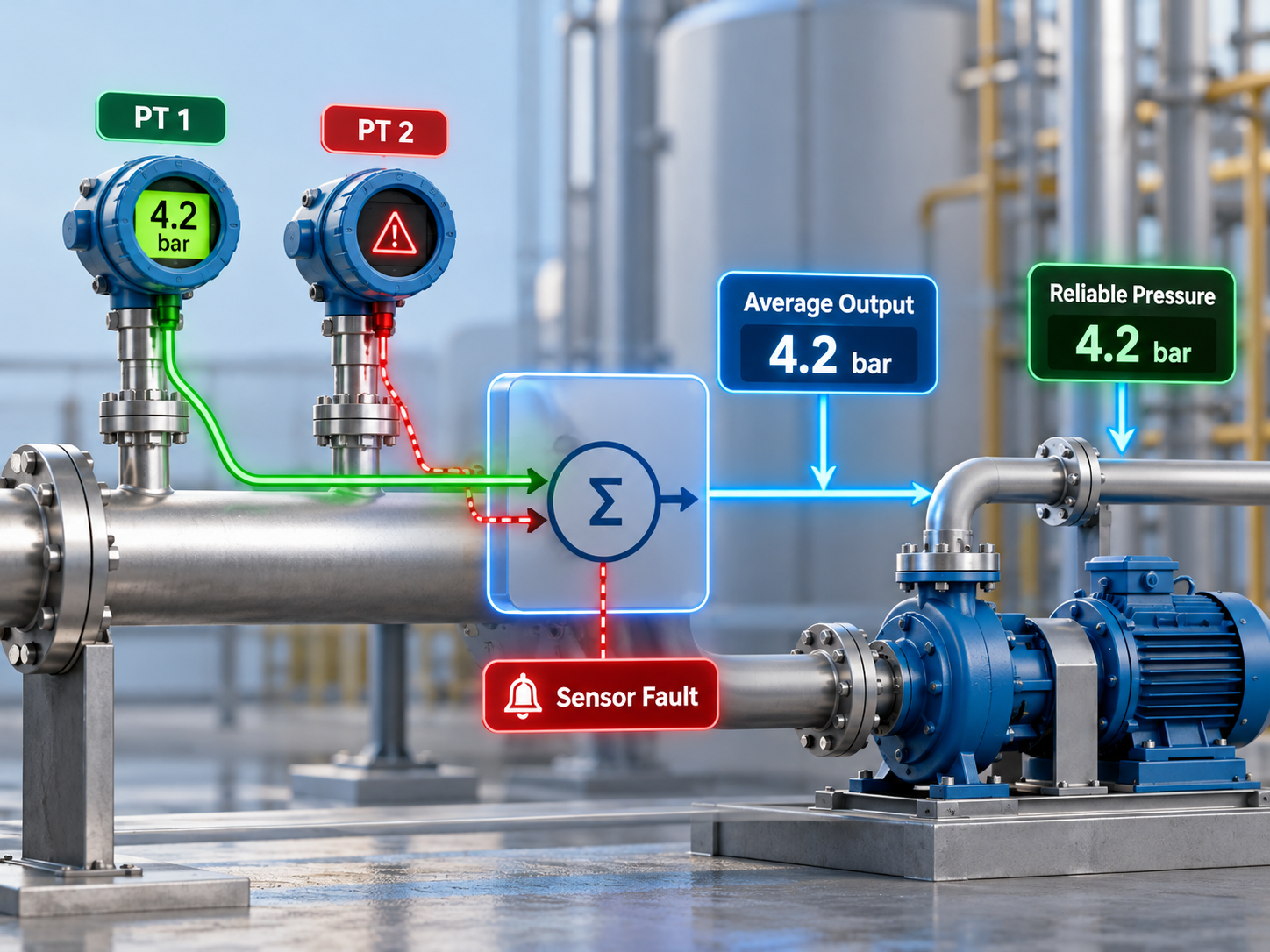
A4U Analog Signal Redundancy Check Control Block – Reliable Dual-Sensor Validation for Stable Process Values
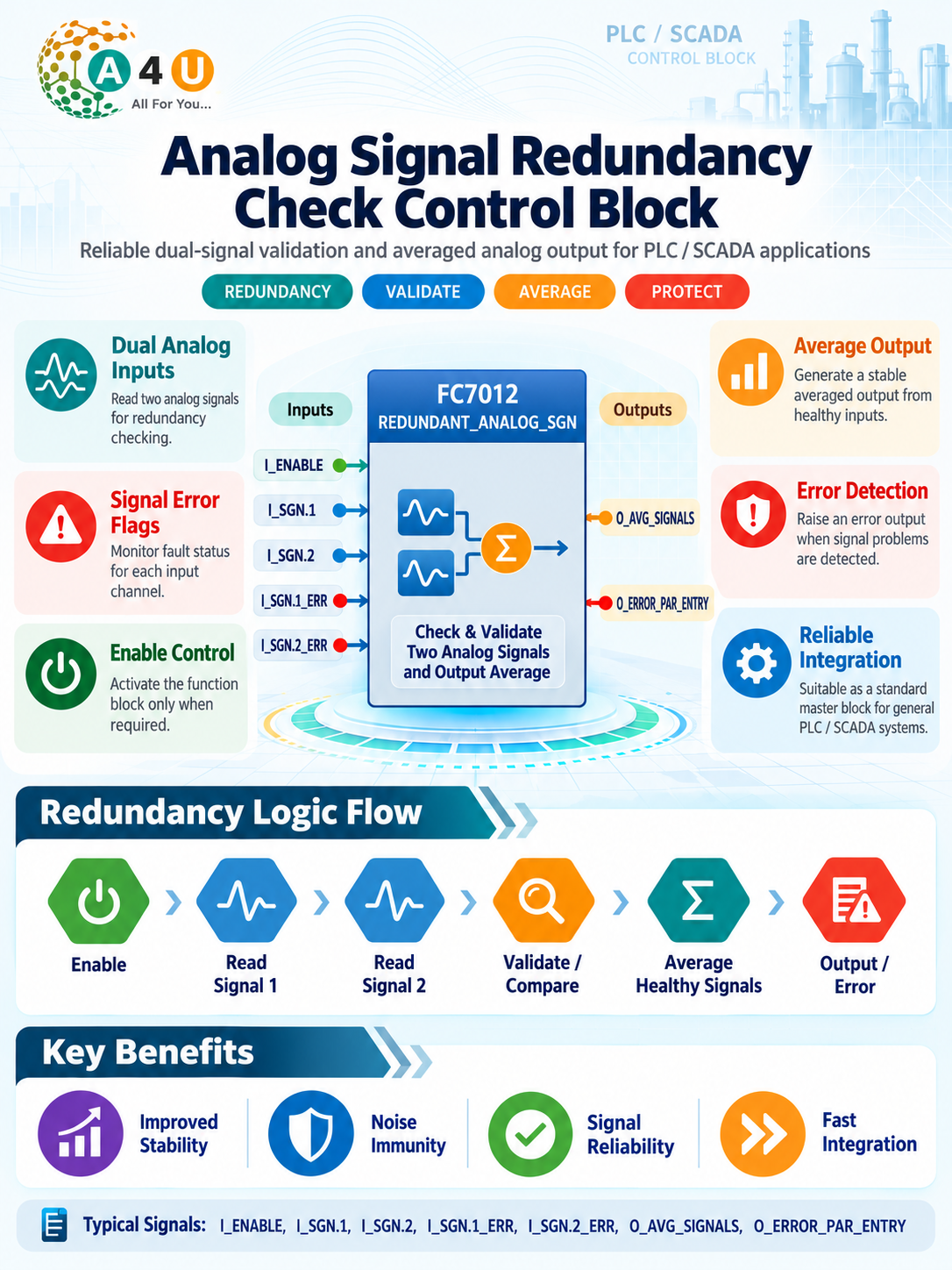
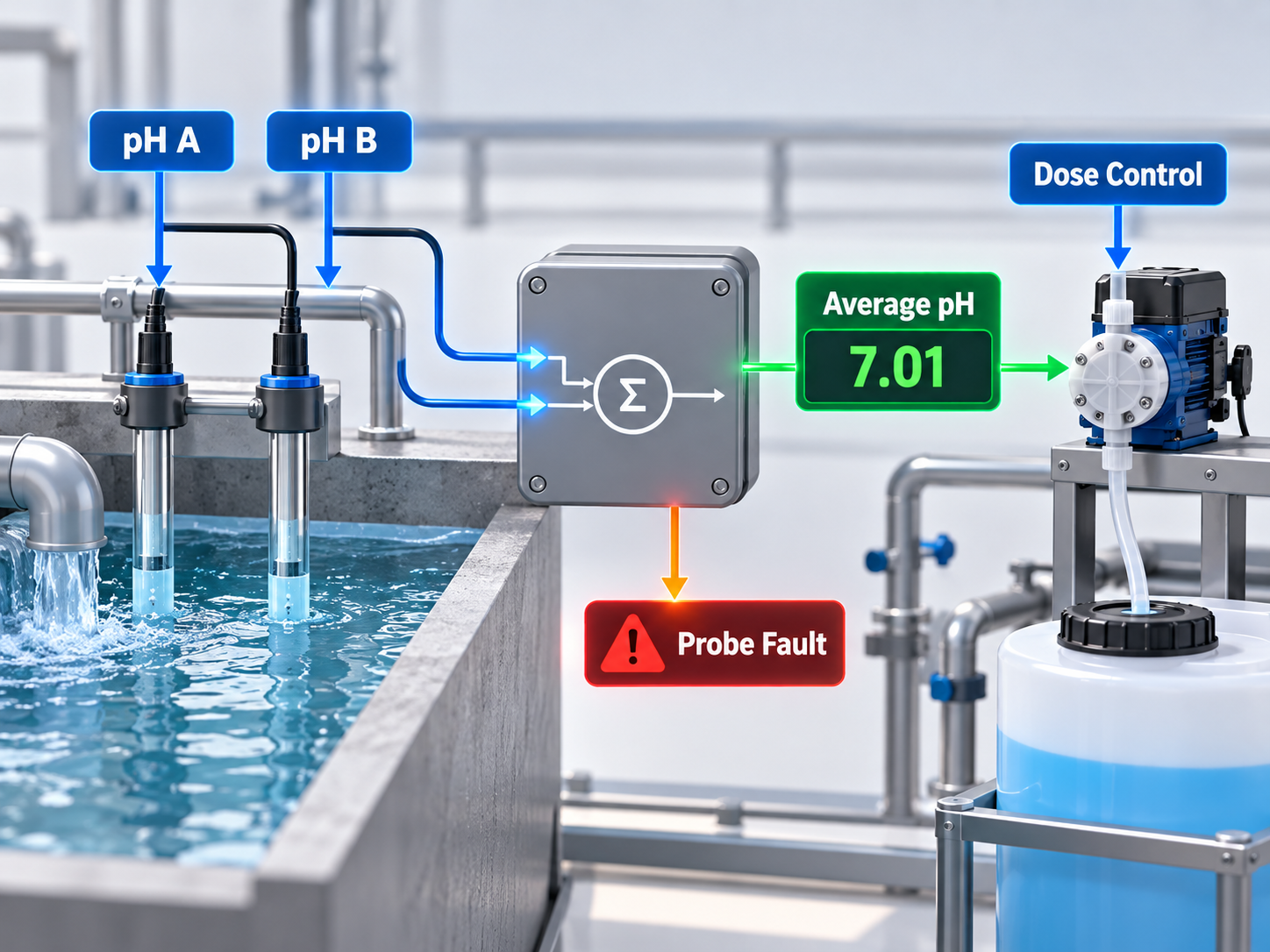
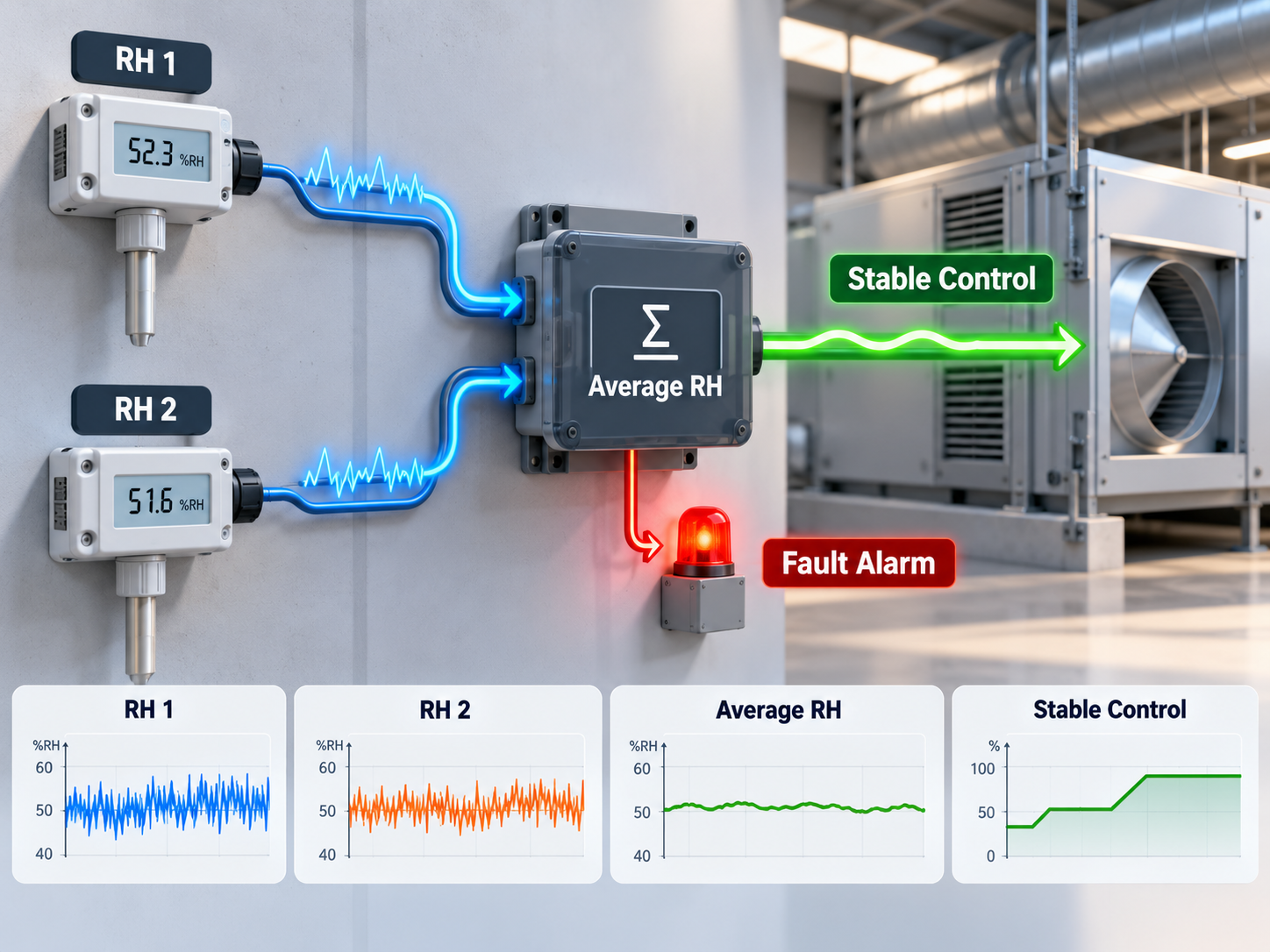
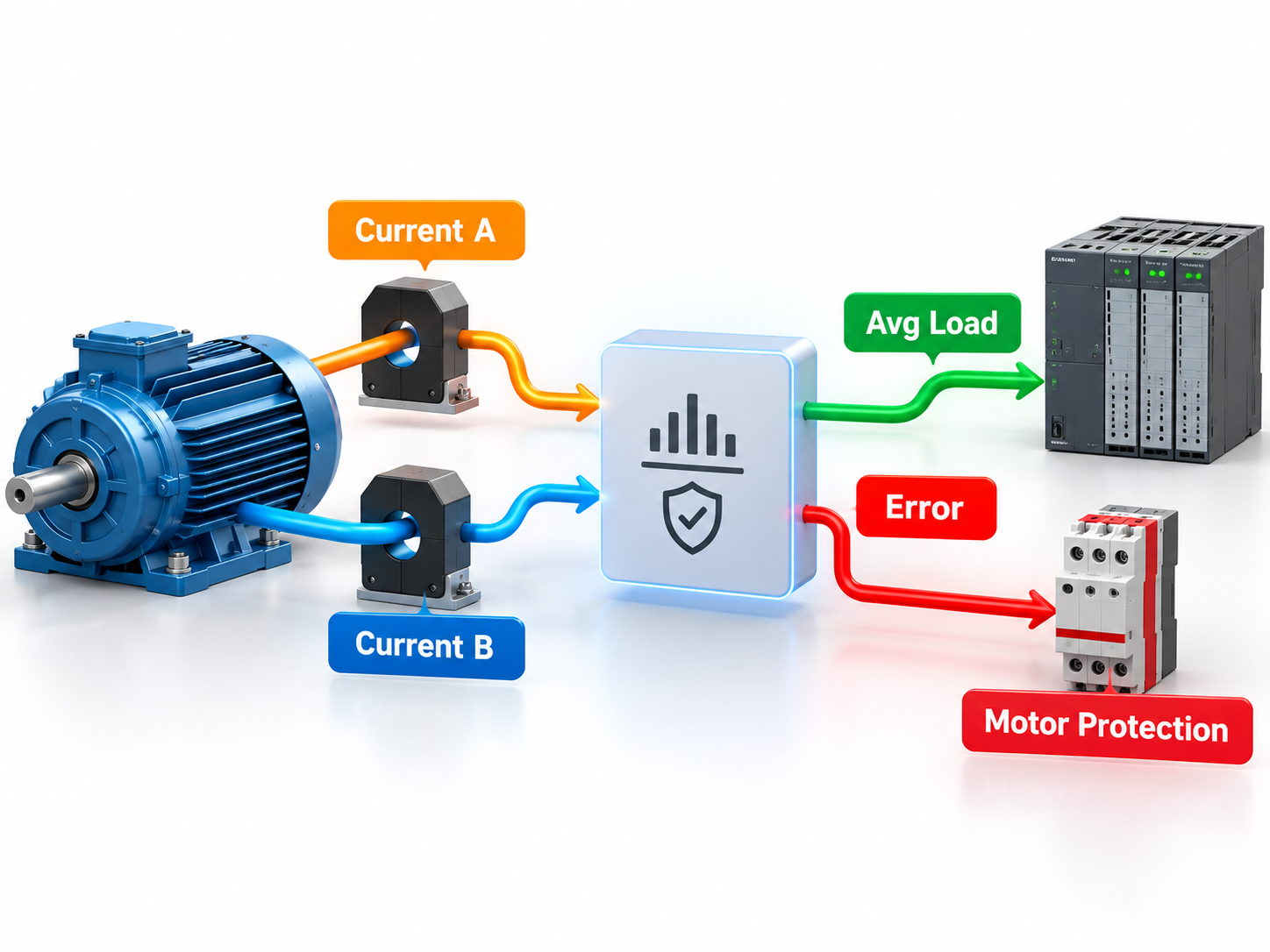
The A4U Analog Signal Redundancy Check Control Block provides a structured and reusable solution for validating two analog input signals within PLC-based industrial automation systems. The block accepts two separate analog measurements and can calculate an average value from both inputs, helping provide a more stable process signal and improve resistance to individual sensor noise or variation. Each analog input also has a dedicated error-status input, allowing the control logic to identify faults associated with either signal and support more reliable process monitoring. The averaged output can be used by downstream PLC logic for control, monitoring or calculation functions, while an additional error output indicates when a processing or parameter-related fault condition is detected. This makes the block suitable for applications where two sensors are used to measure the same or related process variable and a consolidated value is required for improved stability or redundancy handling. Because it is designed as a standard master control block, it is not dependent on a specific HMI or SCADA platform and can be integrated with different supervisory systems according to the project architecture. By combining dual analog inputs, individual signal-error monitoring, average-value calculation and consolidated status handling within one reusable control structure, the A4U Analog Signal Redundancy Check Control Block helps improve process reliability, simplify signal validation and provide a consistent foundation for redundant analog measurement applications.