Services

LIB - TIA - FORCE TO TORQUE CONVERSION BLOCK

  • Price: €5.00

Download Request

A4U Load Force to Torque Conversion Control Block – Accurate Torque Estimation from Mechanical Pulling Load

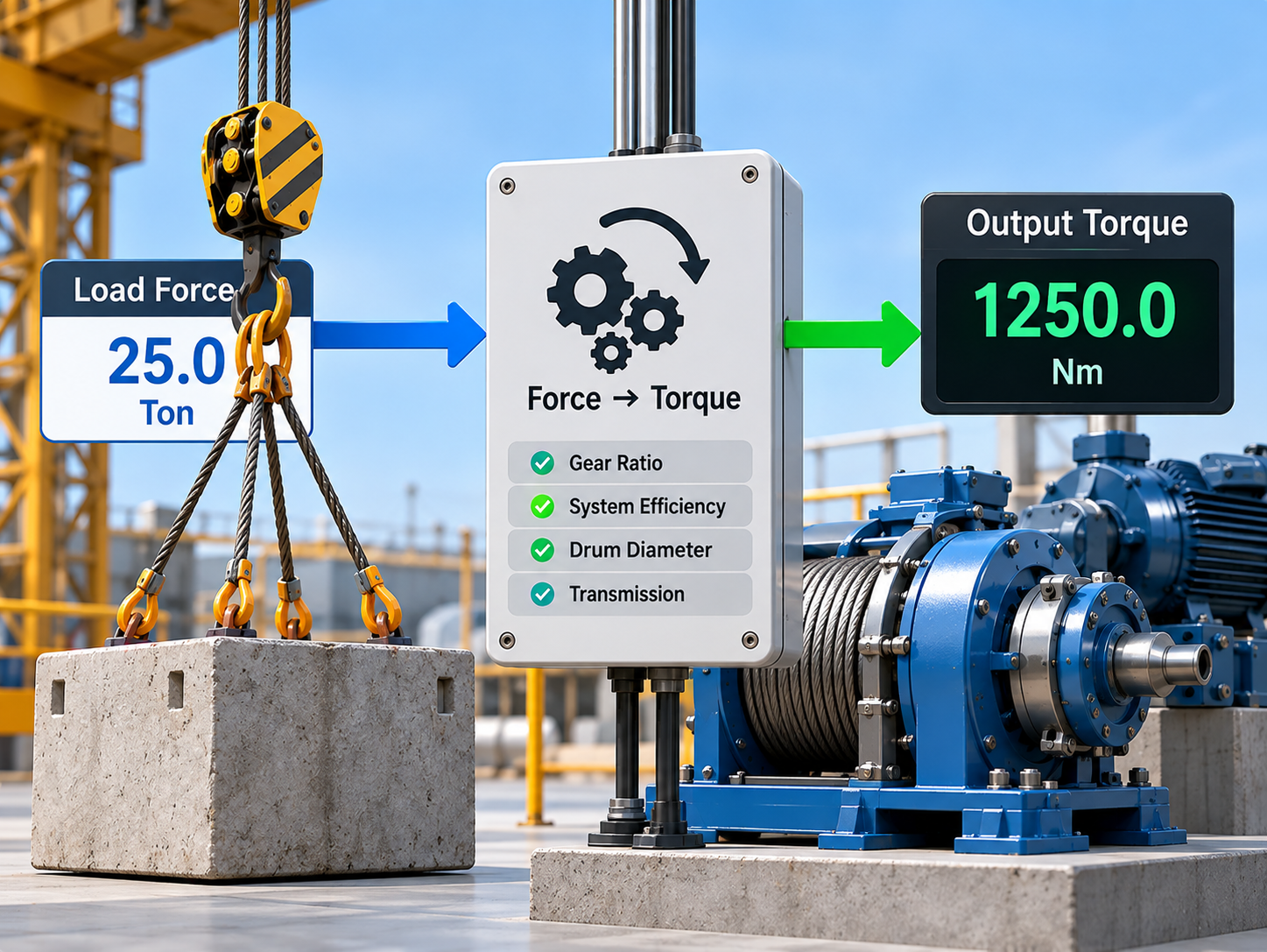
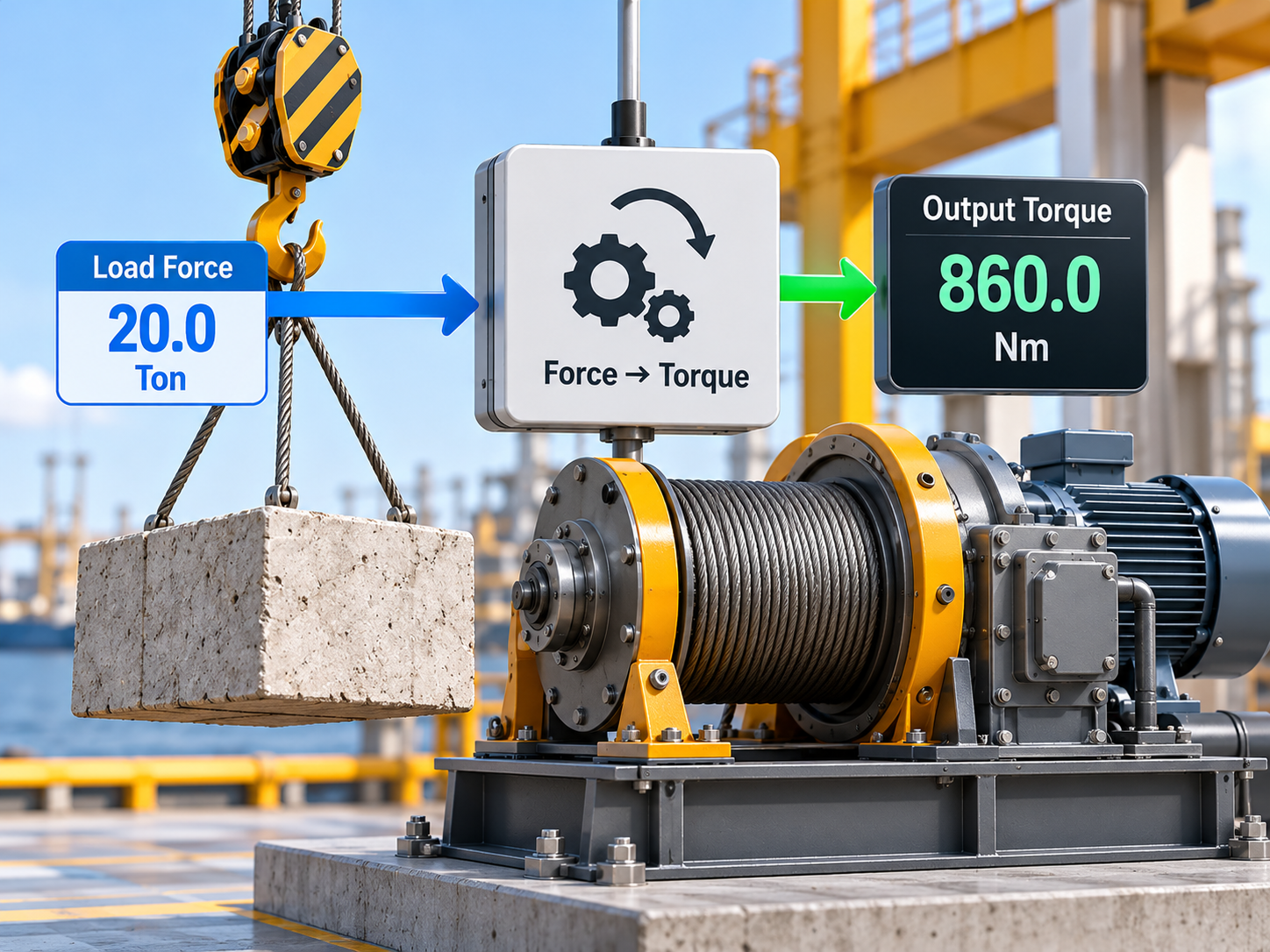
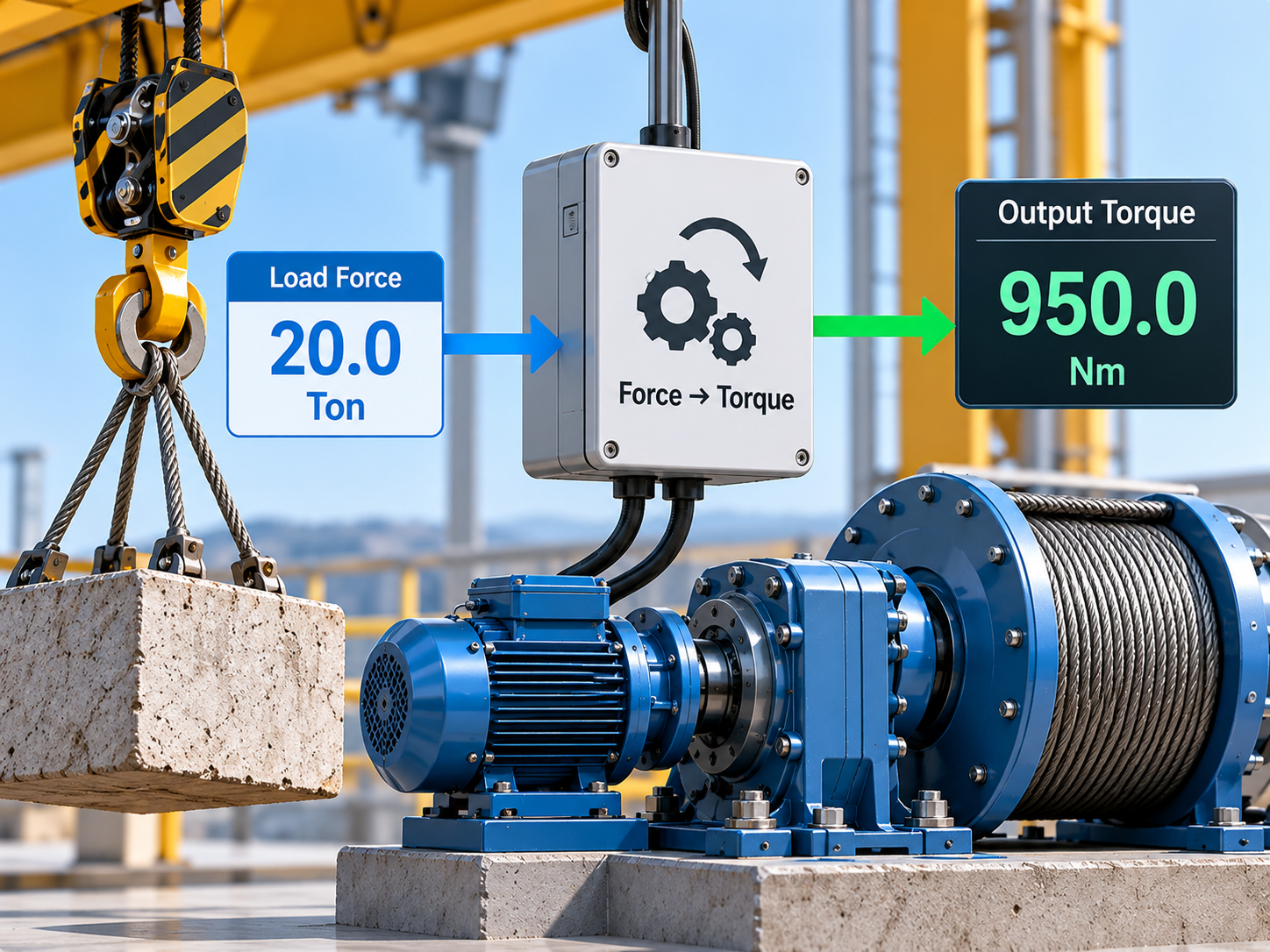
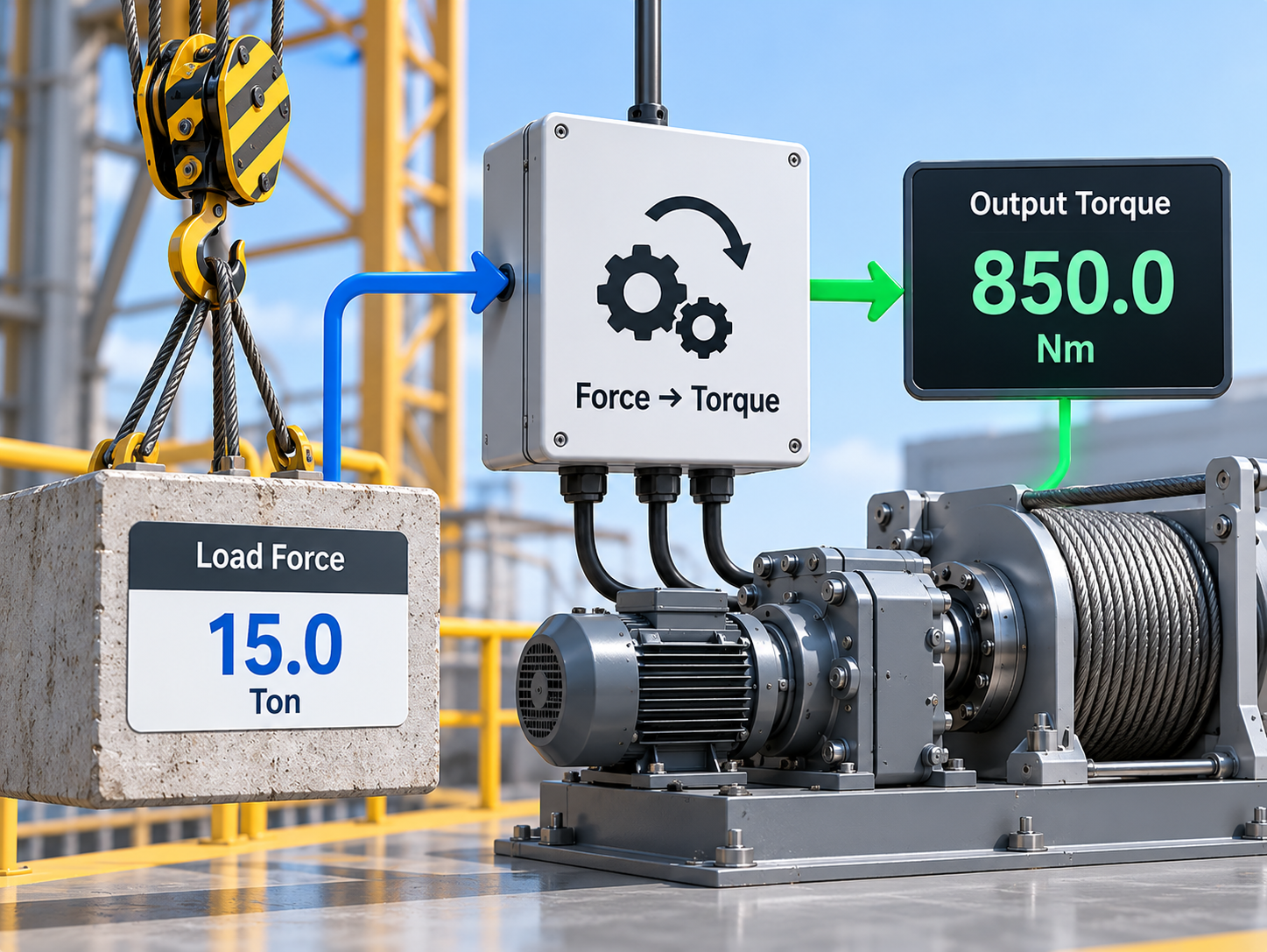
The A4U Load Force to Torque Conversion Control Block provides a structured and reusable solution for converting a mechanical pulling force in metric tons into the corresponding torque requirement in Newton-meters within PLC-based industrial automation systems. Designed for applications such as winches, hoists, traction systems and other load-driven mechanisms, the block takes the applied pulling force and calculates the torque required at the motor or drive shaft while considering the complete mechanical transmission path. The calculation can include up to three gearbox ratios, a bull gear and pinion ratio, drum diameter, rope transmission, and separate mechanical efficiencies for Pay-In and Pay-Out movement. By applying the configured gear ratios and efficiency losses, the block reflects the real mechanical behaviour of the drivetrain rather than relying on a simple force-to-torque conversion. Separate Pay-In and Pay-Out efficiency parameters allow the torque calculation to adapt to the actual direction of movement, helping improve accuracy where transmission losses differ between winding and unwinding operations. The resulting torque output can support drive selection, motor sizing, load regulation, hydraulic or electric drive calculations and system-performance evaluation. An integrated parameter-error output identifies invalid or missing configuration values, helping engineers detect setup problems during commissioning and troubleshooting. Because it is designed as a standard master control block, it is not dependent on a specific HMI or SCADA platform and can be integrated into different automation architectures according to project requirements. By combining load-force conversion, multiple gearbox stages, bull gear and pinion transmission, rope efficiency, drum geometry, directional efficiency handling and parameter validation within one reusable structure, the A4U Load Force to Torque Conversion Control Block provides a consistent foundation for reliable torque estimation across industrial lifting, pulling and winding applications.
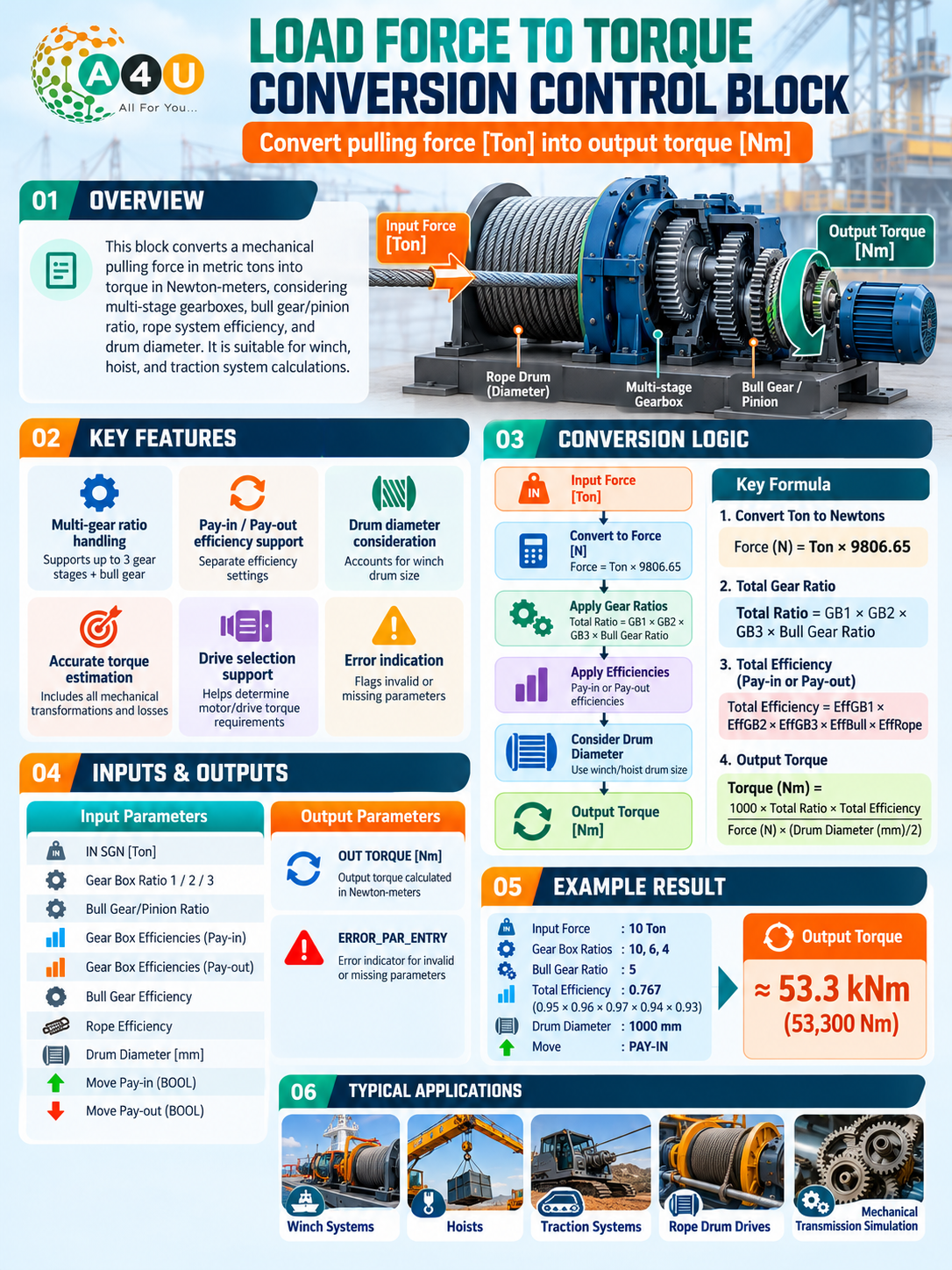

Convert Pulling Load into the Torque Your Drive Really Needs.

Simplify mechanical drive calculations with the A4U Load Force to Torque Conversion Control Block. The block converts pulling force in metric tons into torque in Newton-meters while accounting for gearbox ratios, bull gear and pinion transmission, rope efficiency, drum diameter and separate Pay-In and Pay-Out efficiencies. With integrated parameter-error monitoring, it provides a reusable and standardized solution for winches, hoists, traction systems and other applications where accurate torque estimation is essential for drive sizing and load control.

FAQs

What is the purpose of the Load Force to Torque Conversion Control Block?
+
The block is designed to convert a pulling force expressed in metric tons into the equivalent torque required at the motor or drive shaft. It takes into account the mechanical transmission between the motor and the load so that the resulting torque better represents the real system requirement.
What types of applications can use this control block?
+
The block is intended for mechanical lifting and pulling systems such as winches, hoists, and traction systems where the load is transmitted through a drum, rope, gearbox, and gear arrangement.
How does the block convert pulling force into torque?
+
The pulling force is first converted from metric tons into Newtons. The block then applies the configured gear ratios, system efficiencies, and drum radius to calculate the equivalent torque required at the drive shaft.
Does the block provide parameter-error monitoring?
+
Yes. The block includes an error indication for invalid or missing calculation parameters, helping identify configuration problems before the calculated torque is used elsewhere in the control system.
What is the main benefit of using the Load Force to Torque Conversion Control Block?
+
The main benefit is a standardized method for converting load force into a realistic drive-torque requirement while considering the complete transmission path. This supports more consistent torque estimation for drive selection, load regulation, simulation, and system analysis.

All Services