A4U Smart Analog Input Conversion (10-Point) Control Block – Advanced Sensor Linearization with Calibration, Filtering and Diagnostics
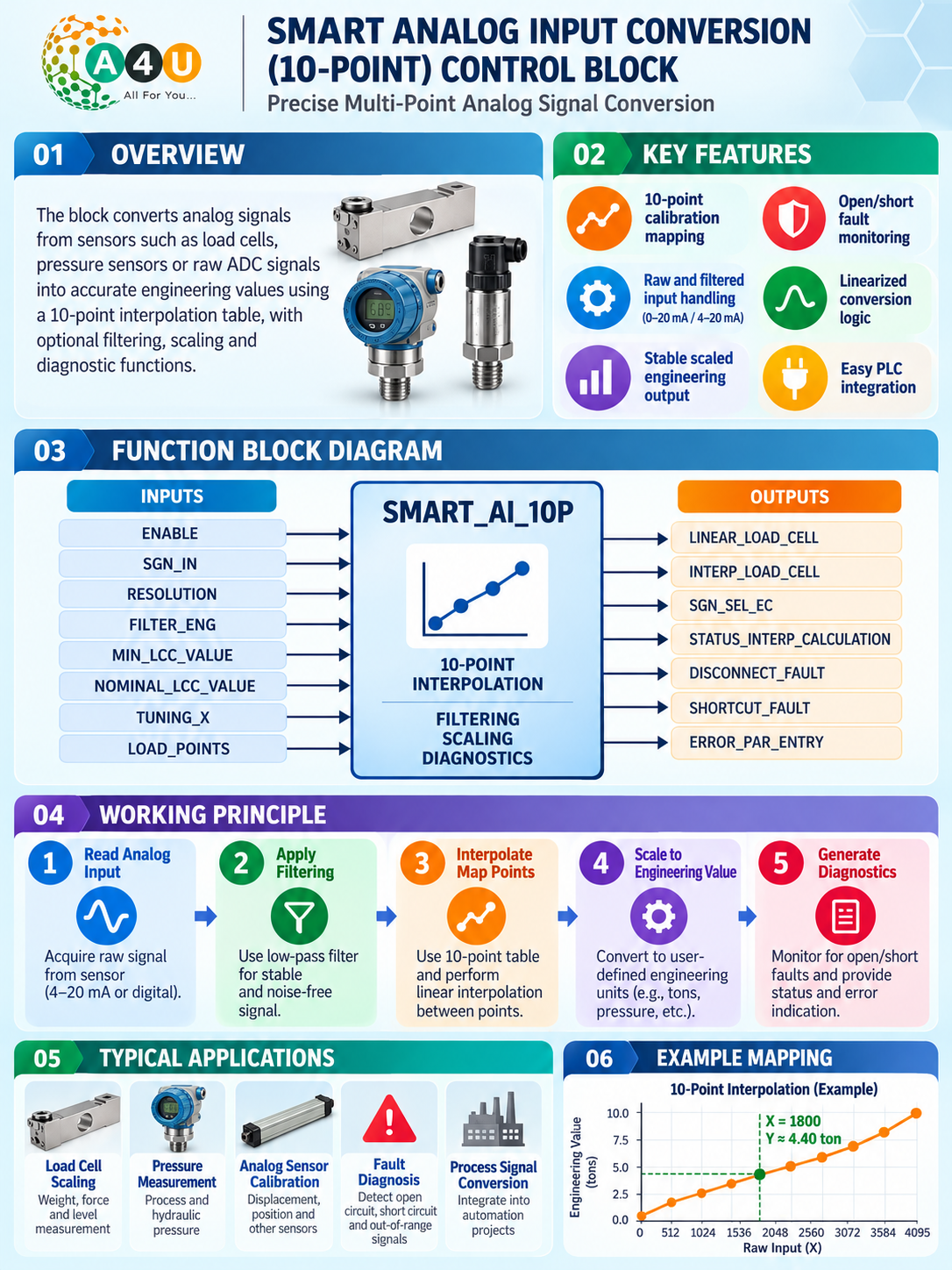
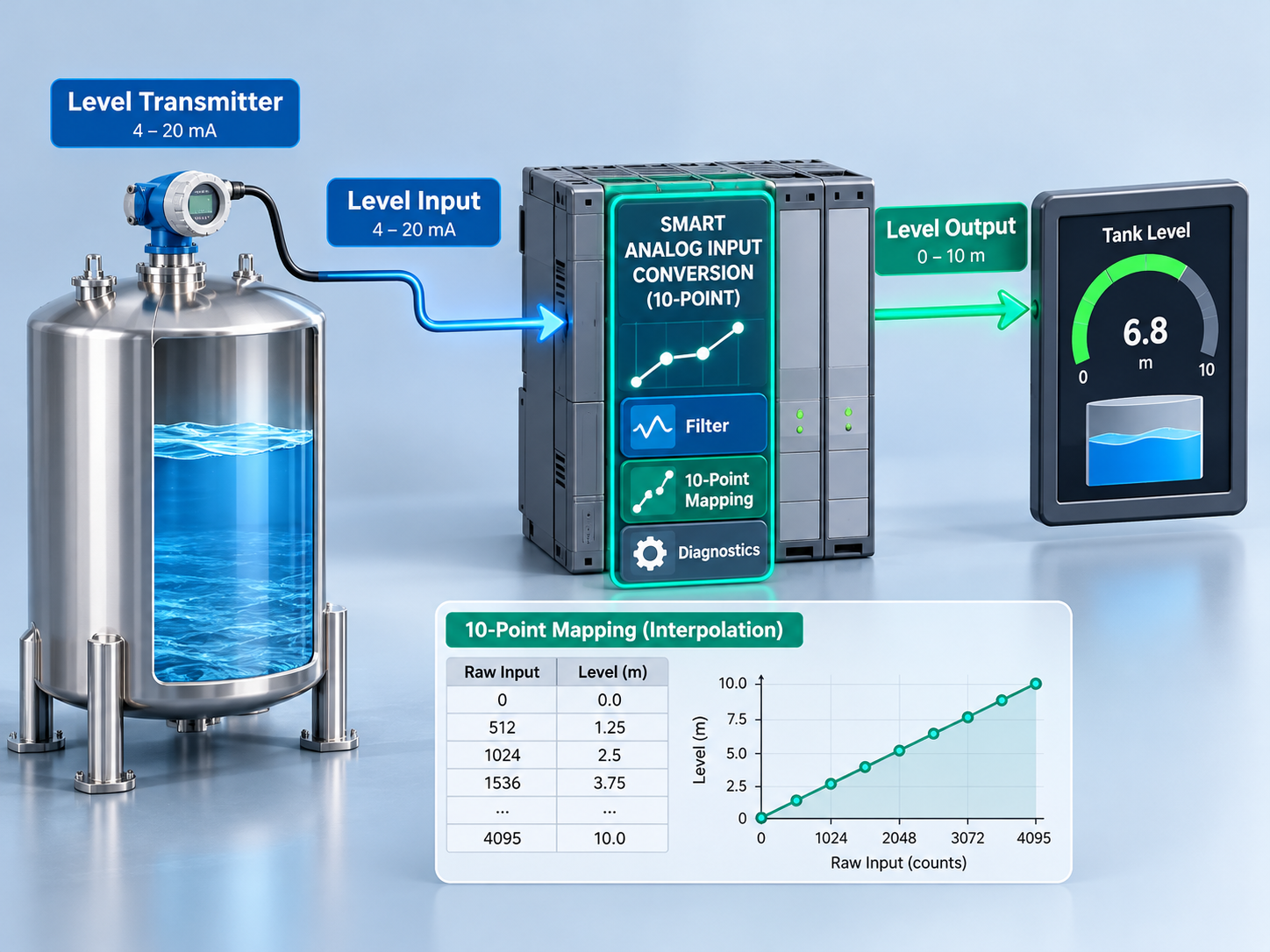
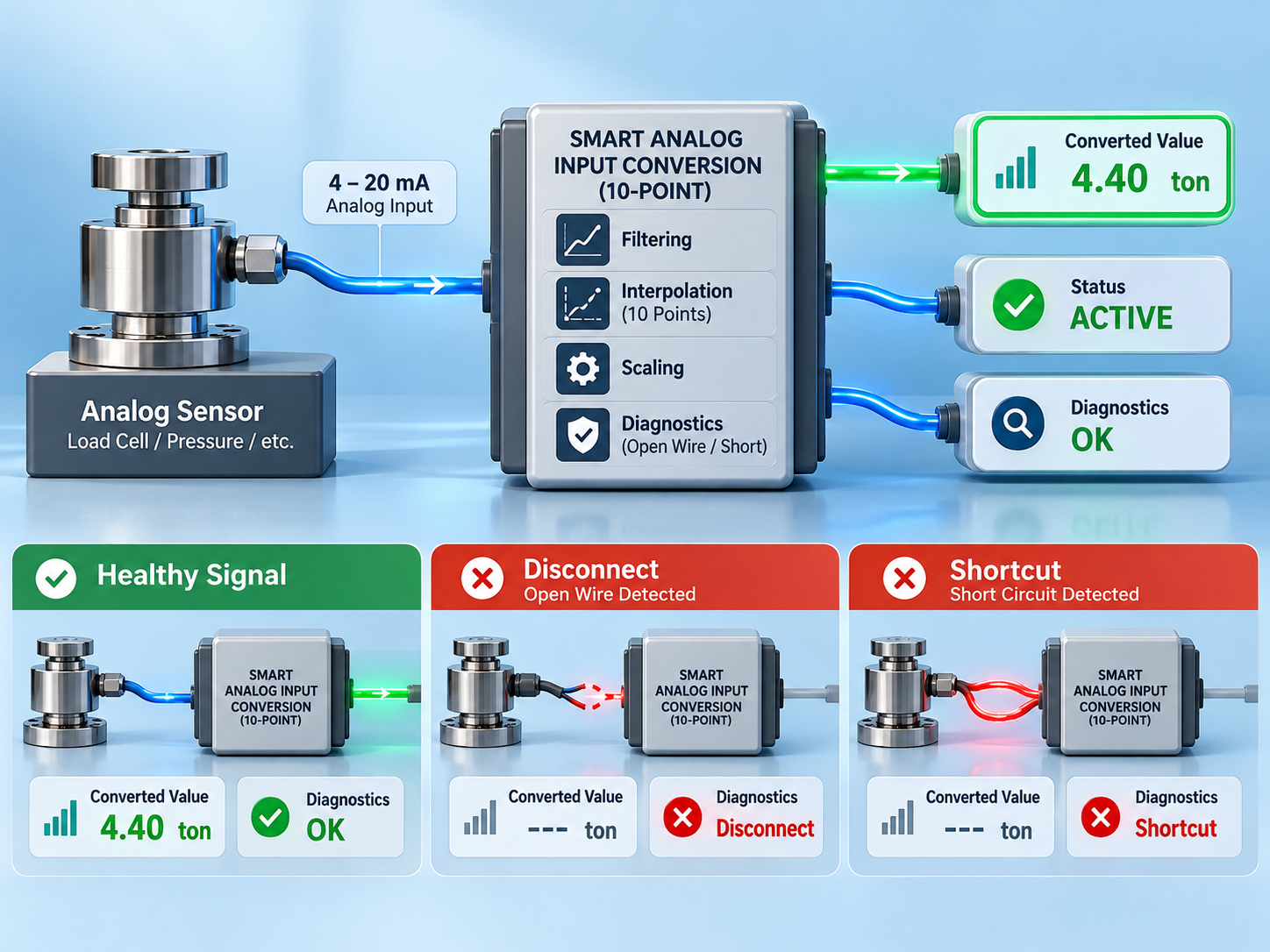
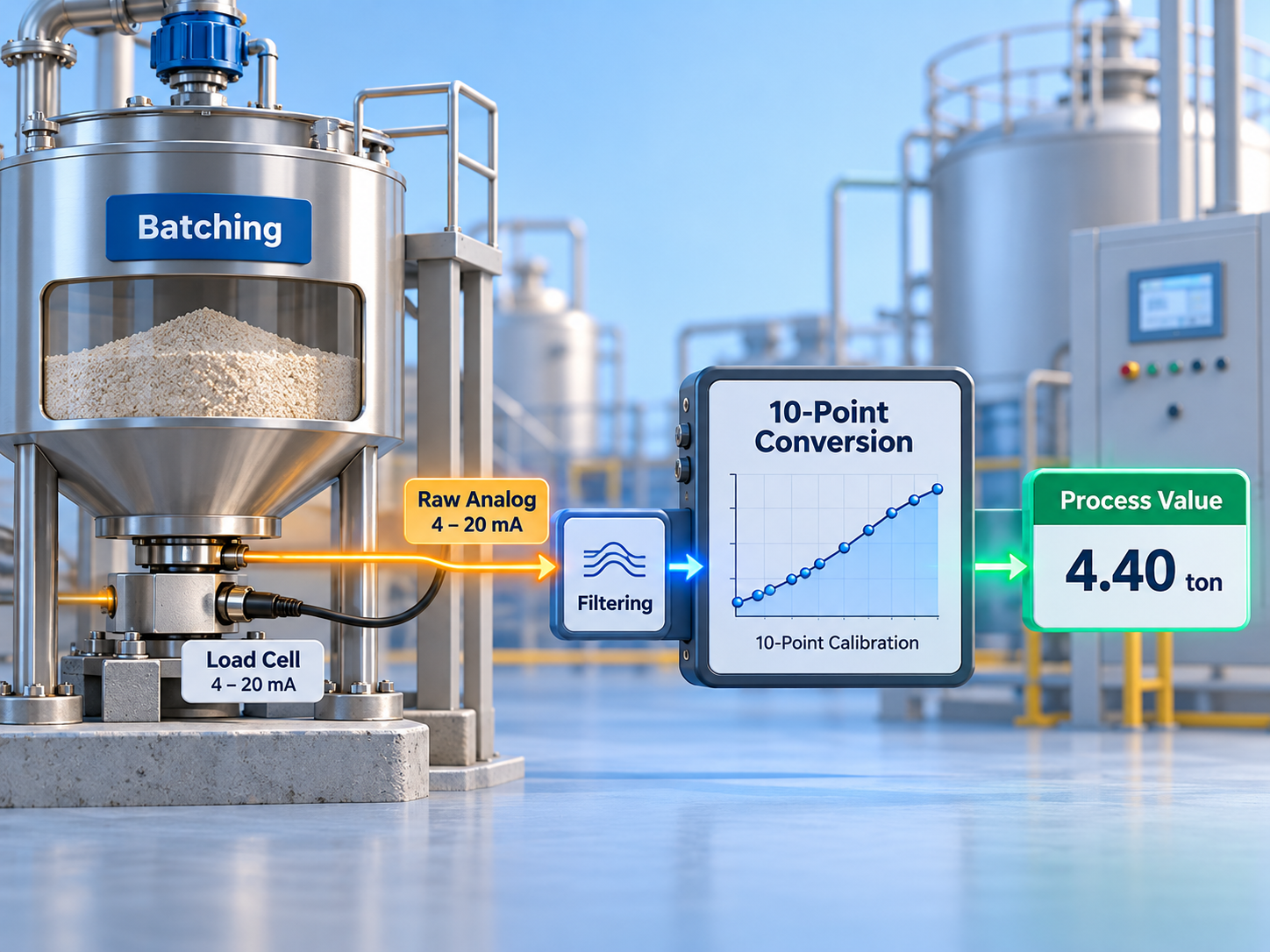
The A4U Smart Analog Input Conversion (10-Point) Control Block provides a structured and reusable solution for converting raw analog sensor signals into accurate engineering values within PLC-based industrial automation systems. The block is designed for sensors such as load cells, pressure transmitters and analog displacement devices, and can process current-loop or raw ADC-based signals using configurable resolution and calibration parameters. Instead of relying on simple two-point scaling, it uses a 10-point tuning table to linearize non-linear sensor characteristics, allowing the incoming signal to be interpolated between calibration points and converted into a more accurate engineering output such as tons, pressure or another process value. The raw signal can first be passed through configurable filtering to reduce noise before interpolation, while minimum and nominal calibration values, resolution settings and additional scaling parameters further refine the final converted value. The block also supports 0–20 mA and 4–20 mA signal configurations and can calculate a corresponding electrical output value in mA when current-based measurement is used. Integrated diagnostics monitor wire-disconnect, short-circuit and incorrect-parameter conditions, helping detect wiring problems, sensor faults or configuration errors during commissioning and operation. Dedicated outputs provide the final linearized engineering value, the intermediate interpolated value, electrical signal value and interpolation status, giving engineers clear visibility into each stage of the conversion process. Tuning can be enabled or reset through dedicated controls, allowing the calibration curve to be adjusted according to the connected sensor or application. Because it is designed as a standard master control block, it is not dependent on a specific HMI or SCADA platform and can be integrated into different automation architectures according to project requirements. By combining 10-point calibration, nonlinear interpolation, signal filtering, current-loop handling, ADC resolution, engineering scaling and integrated fault diagnostics within one reusable structure, the A4U Smart Analog Input Conversion (10-Point) Control Block provides a comprehensive foundation for precise and reliable analog sensor processing across industrial automation applications.