A4U Torque to Load Force Conversion Control Block – Accurate Pulling Force Estimation from Drive Torque
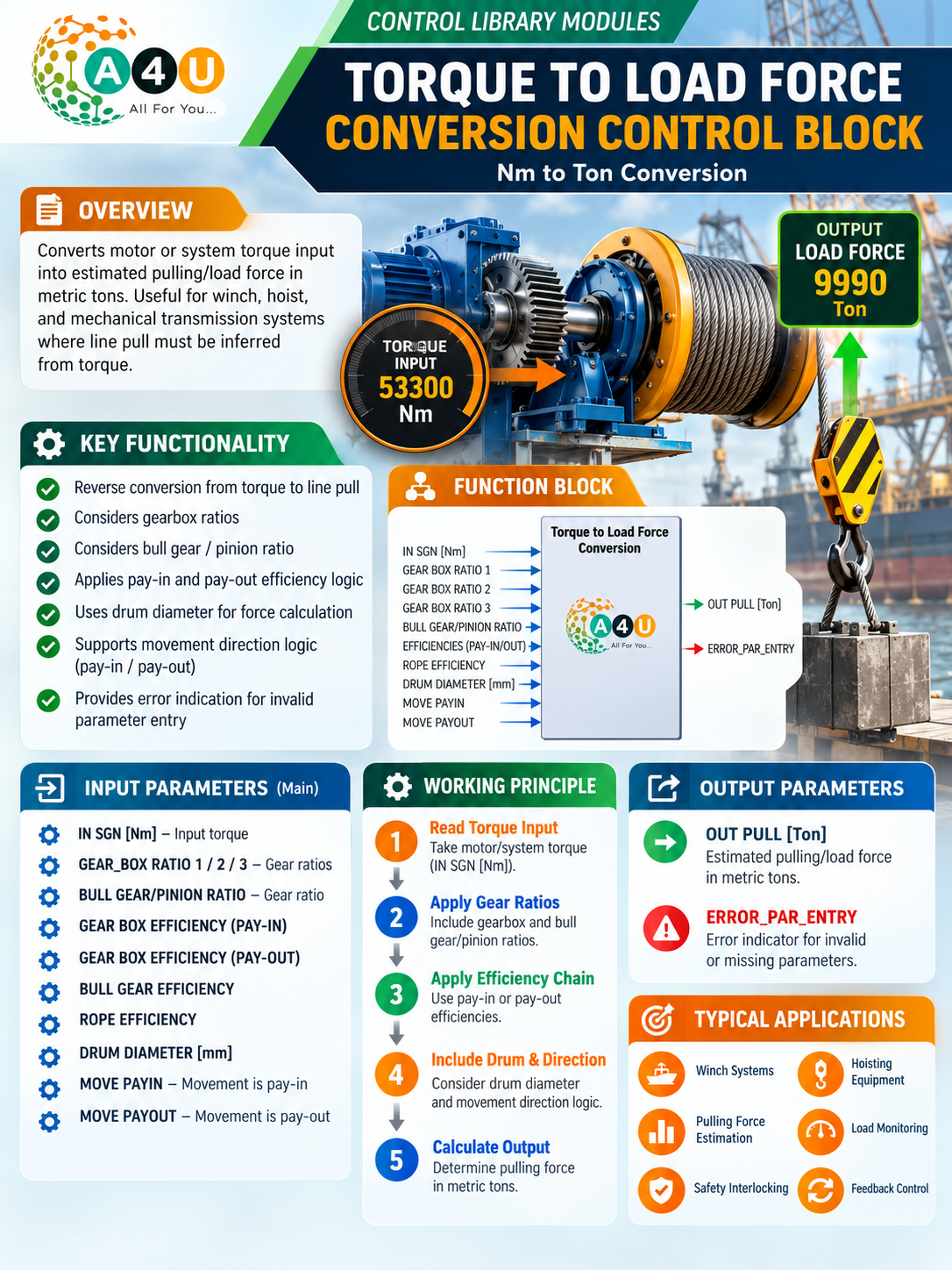
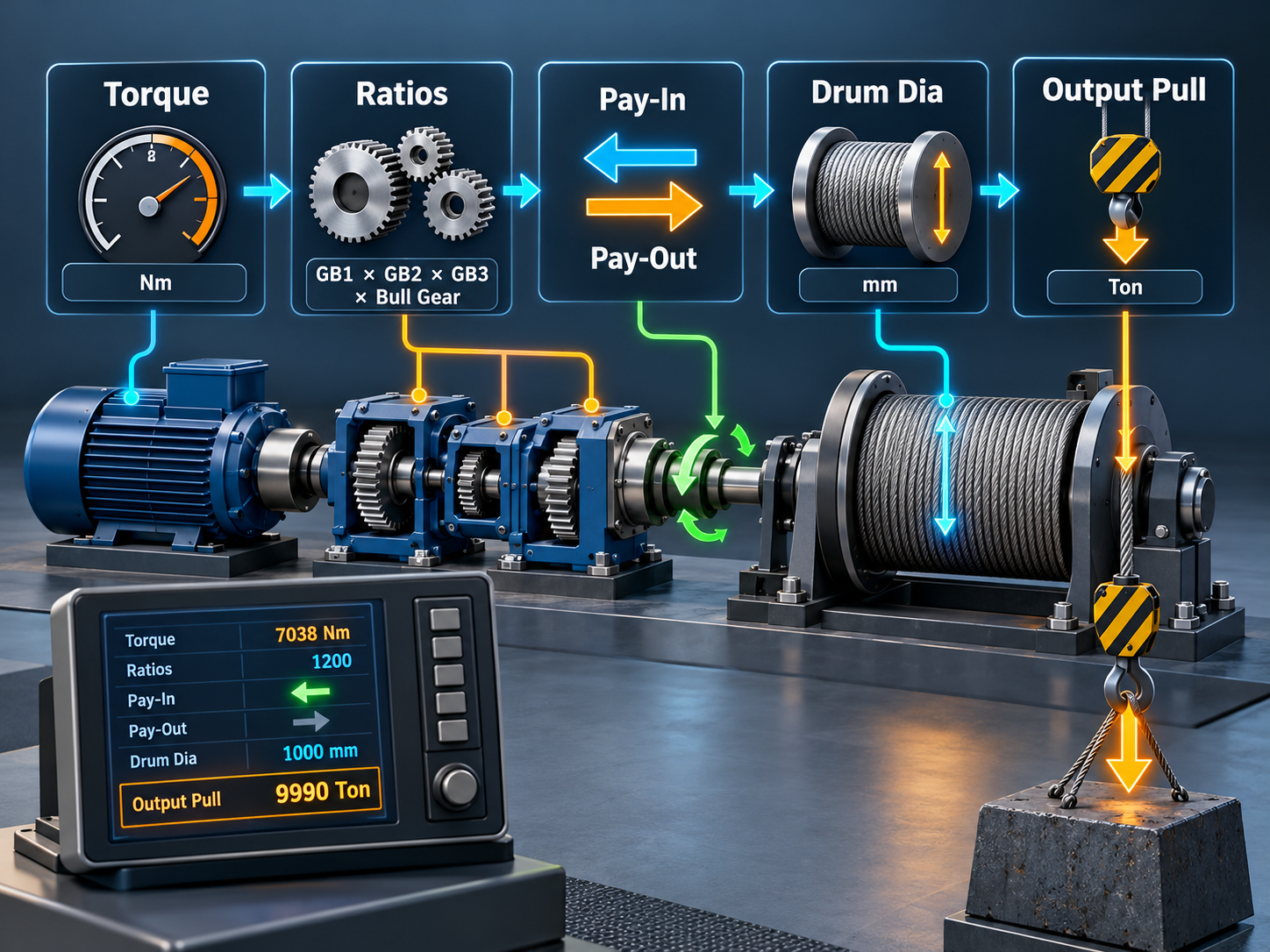
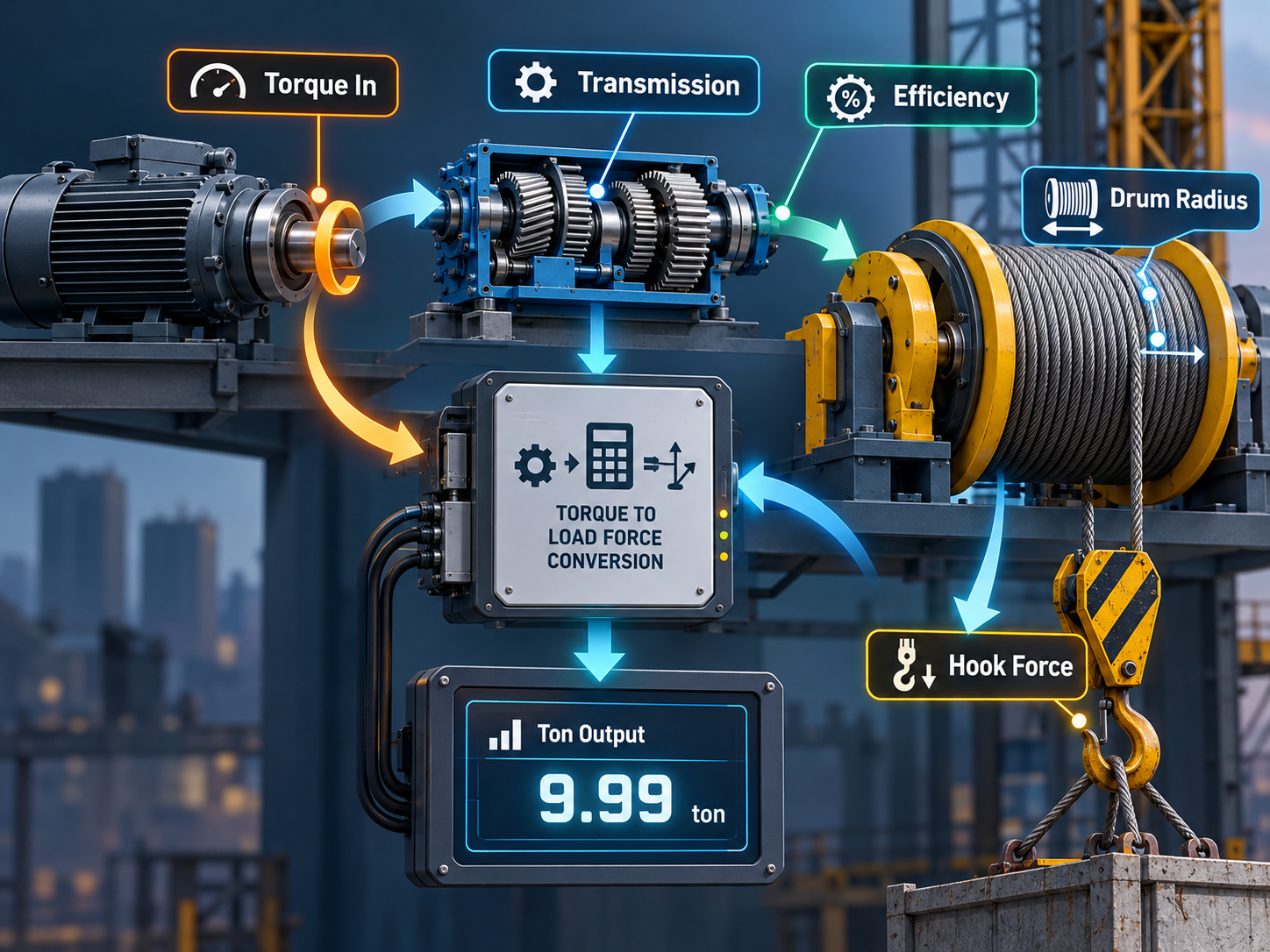
The A4U Torque to Load Force Conversion Control Block provides a structured and reusable solution for converting motor or system torque in Newton-meters into an estimated pulling force in metric tons within PLC-based industrial automation systems. Designed as the reverse calculation of the Load Force to Torque function, the block uses the configured mechanical drivetrain to determine how much pulling force is available at the rope or hook end from a given torque input. The calculation considers up to three gearbox ratios, the bull gear and pinion ratio, drum diameter, rope transmission, mechanical efficiencies and the direction of movement, allowing the resulting pull-force value to reflect the actual transmission path of applications such as winches, hoists and traction systems. Separate Pay-In and Pay-Out efficiency parameters allow the calculation to adapt to directional differences in the drivetrain, while the configured drum geometry and total transmission ratio are used to translate shaft torque into line force. The resulting output can be used for load monitoring, reverse calculation of line pull from torque feedback, safety interlocking, feedback control and system-performance evaluation. An integrated parameter-error output identifies invalid or missing configuration values, supporting commissioning and troubleshooting. Because it is designed as a standard master control block, it is not dependent on a specific HMI or SCADA platform and can be integrated into different automation architectures according to project requirements. By combining torque input, multi-stage gearing, drivetrain efficiencies, drum geometry, movement-direction handling and parameter validation within one reusable structure, the A4U Torque to Load Force Conversion Control Block provides a consistent foundation for estimating available pulling capacity across industrial lifting, pulling and winding systems.